
Add us as your preferred source on Google to see more of our content in Search.
 Add to Preferred Sources
The Global Forum on Environment brings together policymakers and experts from OECD member and partner countries to share best practices and discuss policy challenges related to the environment agenda.
Representatives from business, inter-governmental organisations, research centres, civil society organisations and other relevant institutions are also invited to join the discussions.
Countries are currently facing the urgent need to tackle the climate crisis, reduce pollution, and protect our planet’s biodiversity and other natural resources, while simultaneously ensuring that a transition to a low-carbon greener economy delivers benefits to all.
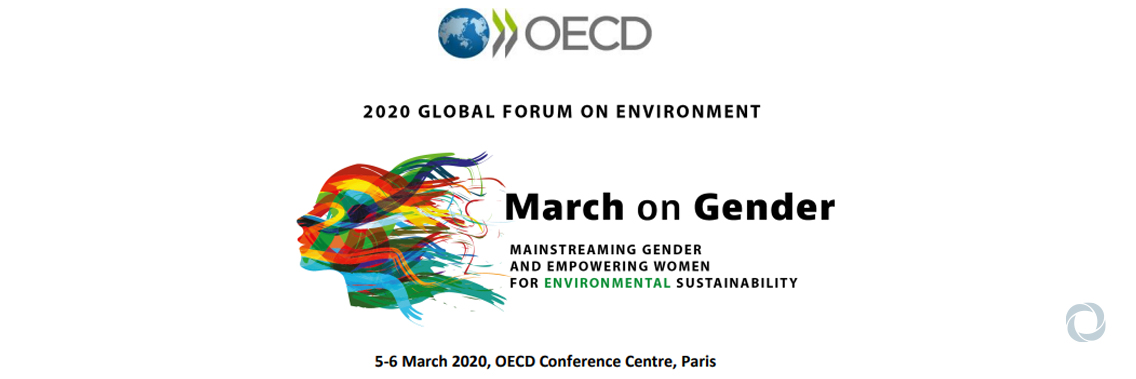
To meet environmental goals and in line with Agenda 2030, policy- and decision-makers need to consider links between environmental policy responses and other goals, such as achieving gender equality and women’s empowerment. In response, the OECD’s 2020 Global Forum on Environment will focus on “Mainstreaming Gender and Empowering Women for Environmental Sustainability”.
Identifying the right synergies between gender equality and environmental policies can reinforce both, increasing their respective effectiveness.
This Global Forum on Environment will review selected environment-related sectors and policies through a gender and inclusiveness lens, specifically:
- health
- infrastructure development, including transport, city and settlement design
- biodiversity, agriculture and fisheries
- green energy and a “just transition”
- circular economy, consumption patterns and waste management
- environmental justice and the empowerment of women and youth.
Participants will have an opportunity to discuss needed transformations at global, national and local levels to achieve both environmental and gender equality goals.
VENUE:
Paris, France
5-6 March 2019
Original source: OECD
Published on 18 December 2019