
Add us as your preferred source on Google to see more of our content in Search.
 Add to Preferred Sources
On-site renewable energy solutions can cost-effectively supply refugee communities with low-cost, reliable electricity, according to the findings of a new report by the International Renewable Energy Agency (IRENA) in cooperation with UNHCR, the UN Refugee Agency.
There are currently almost 26 million refugees in the world today. Unreliable energy exposes them to additional and associated risks which renewables can serve to overcome.
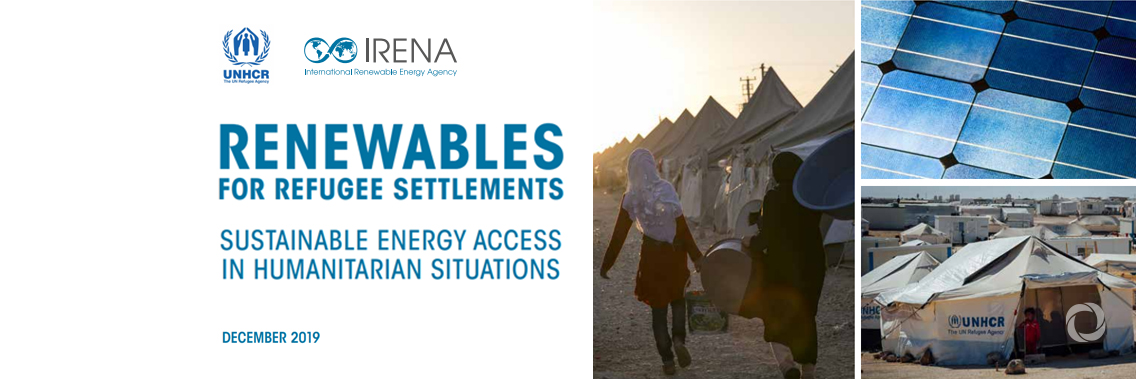
Renewables for refugee settlements: Sustainable energy access in humanitarian situations, released at the Global Refugee Forum currently taking place in Geneva, examines the energy needs at refugee camps and identifies renewables-based solutions for four sites in Iraq and Ethiopia. Solar mini-grids in particular, are highlighted as being able to boost the efficiency of humanitarian operations, avoid costly diesel consumption, and support recently arrived refugees with immediate, reliable electricity access.
The report was launched as both organisations agreed in a new Memorandum of Understanding (MoU) to enhance their existing cooperation on promoting renewable energy solutions for the improvement of the humanitarian situation for millions of people displaced from their homes today.
“Renewables can quickly and effectively change the lives of refugees for the better,” added IRENA’s Director-General Francesco La Camera. “Off-grid and grid connected small and medium-sized solar installations are available, affordable and can bring reliable power to millions of displaced people around the world. We are looking forward to closely work and support UNHCR in its effort to protect life in humanitarian situations. Renewable solutions could become essential to humanitarian toolkit.”
The study contributes to UNHCR’s Global Strategy for Sustainable Energy 2019-2024 and highlights prime opportunities to strengthen any humanitarian operation which can be replicated in other similar situations.
Findings and recommendations of the new report are based on data collected from field missions to the Darashakran and Domiz camps in Iraq and Tsore and Sherkole in Ethiopia. It concludes that in Iraq, blackouts and brownouts remain frequent even at grid-connected settlements, leaving refugees and the humanitarian community dependent on expensive, polluting diesel generators. In Ethiopia, most refugees lack any reliable access to electric lighting. Stand-alone solar systems with battery banks could cushion the impact of voltage fluctuations on the grid. Larger solar parks could provide electricity in and around settlements, as well as creating an enduring asset for host communities.
Read and download the report: Renewables for refugee settlements: Sustainable energy access in humanitarian situations.
Original source: IRENA
Published on 18 December 2019