
Add us as your preferred source on Google to see more of our content in Search.
 Add to Preferred Sources
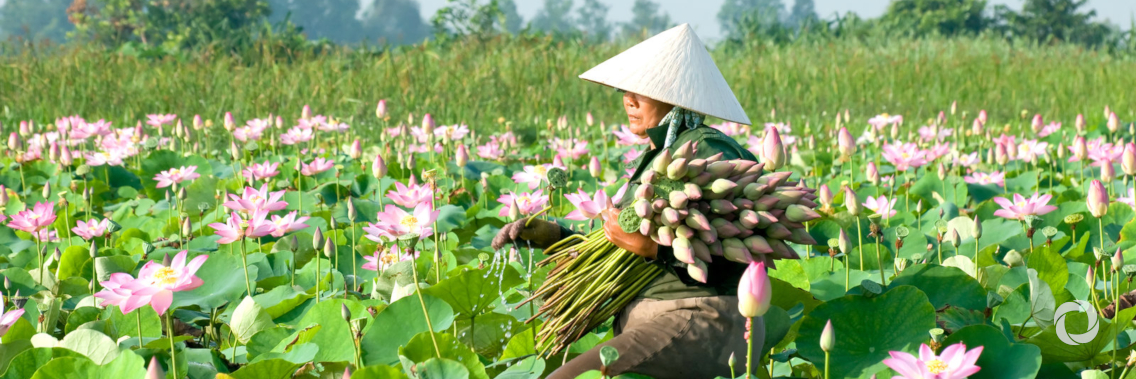
In the little commune of Hoa Dong in Phu Yen province, just south of Viet Nam’s capital, Ha Noi, villagers had planted rice for generations. However, with the changing weather patterns in recent years, millions of people have been affected in Phu Yen and in rural Viet Nam in general and people have started looking for new livelihoods.
With UN Women’s support, farmers were trained in new skills to plant lotus following the standards of VietGAP (Vietnamese Good Agricultural Practices). They also learned about the market, business and skills to build a strong brand for their products.
Mrs. Dang Thi Hong Nga, Chairperson of the Phu Yen Women’s Union said, “The project not only brings new opportunities for local women to increase their resilience to disasters in a sustainable way, more importantly, but they can also fully participate in the decision-making process throughout the project implementation. Before this project, we tried different livelihood models but did not have this level of success. In September, the lotus fields became the first lotus model in Phu Yen to receive the VietGAP certificate, which will open more opportunities for rural women to earn higher incomes.”
Viet Nam is one of the most vulnerable countries to and most affected by, climate change and disasters. It is ranked ninth according to the Global Climate Risk Index 2019. In Viet Nam, 65.76 percent of the population live in rural areas. Agriculture employs about half of the labour force and is by far the main source of livelihoods for ethnic minorities. Most rural women are engaged in smallholder farming and subsistence agriculture with less access to information, resources, credit, markets, vocational training and extension services, especially those from poor and ethnic minority households. This limits their ability to adapt and build resilience to climate change.
Elisa Fernandez, UN Women Head of Office in Viet Nam, said that local women in the areas affected by climate change could contribute effectively to efforts to adapt to climate change and enhance resilience and sustainable development if they receive adequate support to improve their livelihoods and capacity.
“Gender equality is therefore regarded as a basis for effective disaster response and climate change adaptation activities, and also a mechanism for achieving the Sustainable Development Goals,” Fernandez affirmed.
The project, “Strengthening women’s livelihoods and participation for greater resilience to disasters and climate change in Viet Nam,” has been implemented in three provinces, including Lao Cai, Quang Nam and Phu Yen, directly impacting around 400 people. The project is financed through the generous contributions of the Chanel Foundation for a three-year period (2018-2021).
Original source: UN Women
Published on 08 January 2019