
Add us as your preferred source on Google to see more of our content in Search.
 Add to Preferred Sources
The International Renewable Energy Agency (IRENA) signed a memorandum of understanding (MoU) with the United Arab Emirates (UAE) Ministry of Energy and Industry, to cooperate in the field of renewable energy and drive an accelerated shift to low-carbon energy sources.
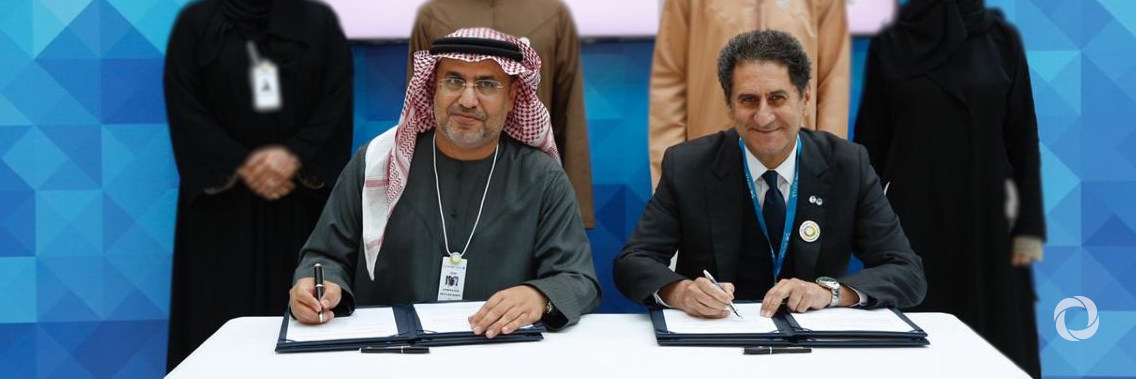
The MoU was signed in by IRENA Director-General Francesco La Camera and Undersecretary of the UAE Ministry of Energy His Excellency Dr. Matar Hamed Al Neyadi in the presence of UAE Energy Minister His Excellency Suhail Al Mazrouei, during Abu Dhabi Sustainability Week.
IRENA Director-General Francesco La Camera said: “The case for renewable energy in the UAE and across the Gulf is unquestionable. Today, solar and wind are the country’s most cost-effective sources of new power generation – contributing to growth, economic diversification and sustainable development in the Emirates.”
“This agreement marks a further strengthening of the Agency’s close relationship with the UAE government as it charts a new course of energy leadership into the 21st century,” continued Mr. La Camera. “Together with the Ministry of Energy, IRENA will work to explore the full potential of the UAE’s vast and diversified energy resources.”
The agreement aims to strengthen and enhance cooperation and the existing business relationship between the UAE Ministry of Energy and Industry and IRENA to develop knowledge products, conduct analysis, exchange information and organize workshops on renewable energy.
Cooperation between the two parties includes the following:
- The development of a UAE renewable energy road map, taking into account UAE’s characteristic demand for air-conditioning and associated technology.
- Support with renewable energy dissemination policies, both current and planned, intended to support deployment of renewables.
- Electrical interconnection and energy exchange plans and procedures intended to enhance integration of variable and renewable energy, as well as the impact of renewable energy on the stability of transmission networks together with possible technical and operational solutions in this regard.
Under the MoU the two partners will exchange quantitative information on data, statistics, costs, benefits and analytical information related to renewable energy technologies and policies. Best practice in financial instruments and regulatory measures including energy efficiency, market design, system flexibility and long-term planning for high shares of renewable energy will also feature.
Original source: IRENA
Published on 15 January 2019