
Add us as your preferred source on Google to see more of our content in Search.
 Add to Preferred Sources
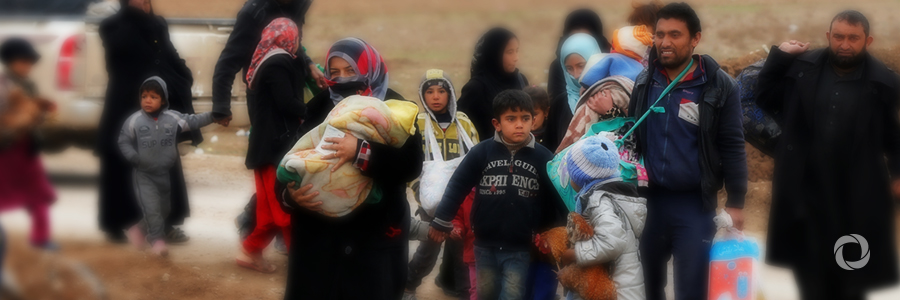
In Mosul a battle is raging to take back the city from ISIL. As the fighting ends, essential work is ramping up to make sure that people who have been displaced by occupation and war can return to their homes as fast as possible – and stay there.
 The United Nations Development Programme (UNDP), in close cooperation with the Iraqi government, the provincial authorities and the international coalition, has helped to re-boot social and economic recovery in 18 locations that have been liberated from ISIL, including Falluja and Tikrit. The Funding Facility for Immediate Stabilization (FFIS) project worth $790 m is designed to support the early recovery effort in liberated towns through a three-month, high-impact program to motivate millions of displaced Iraqis to return to their communities from camps and informal settlements across the country.
UNDP is making sure that people get services like water, clinics, schools, police stations, markets and government buildings. Families are receiving help to rebuild damaged homes, public infrastructure is being rehabilitated and small businesses are being supported with cash grants to get started again. These actions are essential to ensure those who were forced to flee are able to return and stay in the area, making them productive citizens once again. It is the first step towards post-conflict recovery and peace building.
 While the battle for Mosul is continuing, UNDP is already working in the liberated Eastern section of the city which is now free from ISIL. Many people have already returned home but water and electricity stations must be rebuilt and people need to be able to work and earn money. UNDP is providing this through cash for work projects and alongside this is rehabilitation of schools and clinics, many of which were destroyed during the fighting.
However, the sheer size of Mosul, Iraq’s second largest city with a population of around 1.5 million, means it will be an enormous challenge. Providing a rapid boost to the city’s economic recovery will help to calm fears, but it will not be cheap. Although it is difficult to estimate how much will be needed, partly because there is still a tough battle ahead for the city’s western section, the budget will be much bigger than that for cities such as Ramadi or Fallujah. An initial estimate suggests that some $200 million will be required to stabilise the city, although this could be substantially higher depending on the level of destruction in the western part.
On top of that, the city’s population has been traumatized after two years of ISIL rule, and there are fears that revenge and sectarian hatred will be rampant. One of the lessons learned from the stabilization projects in other cities is that political leadership by the authorities and local leaders will be crucial to overcome this.