
Add us as your preferred source on Google to see more of our content in Search.
 Add to Preferred Sources
Every year, billions of people go on holiday to escape from the hustle and bustle of everyday life. Eight out of ten tourists travel to coastal areas, hoping to relax under blue skies, clear waters and white sandy beaches.
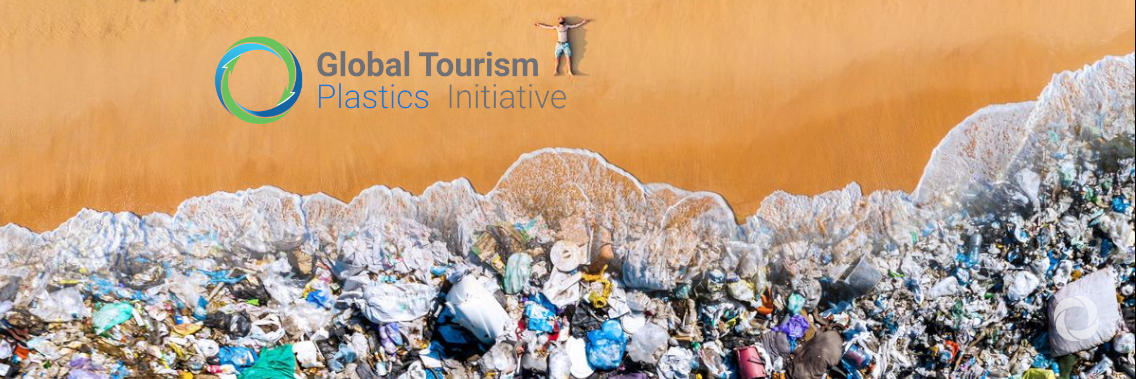
Increasingly, however they risk finding an ocean coloured not by vibrant species of fish and coral, but by chocolate wrappers, single-use bottles and plastic straws. The sand too is buried under layers of cigarette butts, discarded flipflops and ice cream tubs. In fact, during peak tourist season, marine litter in the Mediterranean region has been found to increase by up to 40 percent. With great irony, tourism, which often depends upon the Earth’s natural beauty, is making enormous contributions to its decay in a very visible way.
Alongside the 8 million tonnes of plastic that enter the ocean every year, 300 million tonnes of new plastic is created annually, utilizing non-renewable resources such as oil, gas and coal, and contributing to climate change. If growth in plastic production and incineration continue, cumulative emissions by 2050 will make up between 10 and 13 percent of the total remaining global carbon budget. As a result, the implications of plastic overconsumption extend even further than the litter that is visible in the ocean.
Many stakeholders in the tourism industry have been taking action against plastic pollution—moving away from single-use plastics, reducing consumption of unnecessary plastics, and moving towards circularity through better recycling and reusing schemes. However, in order to tackle the enormity of the plastic problem, equally enormous action is needed, across the entire tourism value chain.
The goal of the Global Tourism Plastics Initiative is to bring the tourism sector together under a common vision to transition to a circular plastic economy and sustainability in the sector. The initiative has been developed by the Sustainable Tourism Programme of the One Planet Network, a multi-stakeholder partnership to implement Sustainable Development Goal 12 on sustainable consumption and production, and is led by the United Nations Environment Programme (UNEP) and the World Tourism Organization in collaboration with the Ellen MacArthur Foundation.
The Global Tourism Plastics Initiative requires tourism organizations to make a set of concrete commitments by 2025, including:
- Eliminate problematic or unnecessary plastic packaging and items by 2025
Take action to move from single-use to re-use models or reusable alternative by 2025 - Engage the value chain to move towards 100 percent of plastic packaging to be reusable, recyclable, or compostable
- Take action to increase the amount of recycled content across all plastic packaging and items used
- Commit to collaborate and invest to increase the recycling and composting rates for plastics
- Report publicly and annually on progress made towards these targets
Original source: UN Environment
Published on 29 January 2019