
Add us as your preferred source on Google to see more of our content in Search.
 Add to Preferred Sources
The International Labour Organization (ILO) says there is an urgent need to tackle the high level of poverty and inequalities facing indigenous peoples.
According to a new ILO report, released to mark the 30th anniversary of the Indigenous and Tribal People’s Convention 1989 (No. 169), indigenous peoples are nearly three times as likely to be living in extreme poverty as their non-indigenous counterparts.
They account for almost 19 percent of the extreme poor (those living below US$1.90 per day). Even when less stringent poverty lines are used (US$3.20 or US$5.50 per day), a disproportionate number of poor are indigenous peoples. Furthermore, irrespective of the region and residence in rural or urban areas, indigenous peoples represent a sizable share of the global poor.
“Progress in improving the lives of indigenous peoples has been too slow,” said Martin Oelz, an ILO specialist and co-author of the report. “More ratifications of Convention No. 169 and action for its effective implementation would be a step in the right direction. To ensure that public policies address the needs of indigenous peoples and reflect their aspirations, it is essential to tackle the widespread absence of institutional and legal frameworks enabling their participation in decision-making.”
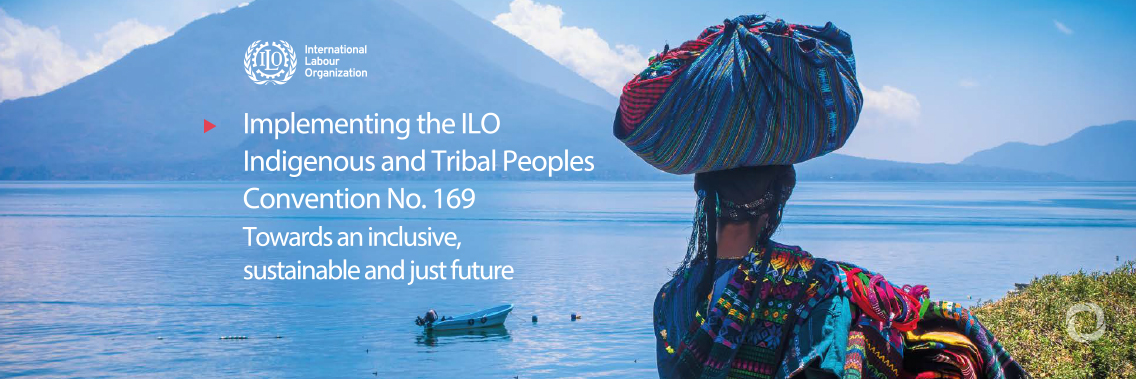
New figures contained in the report, Implementing the ILO Indigenous and Tribal Peoples Convention No. 169: Towards an inclusive, sustainable and just future, show that the number of indigenous peoples worldwide is considerably higher than previously thought – equivalent to more than 6 percent of the global population.
This amounts to over 476 million people – significantly more than the combined populations of the United States and Canada. More than 80 percent of indigenous peoples globally live in middle-income countries.
The Convention is the only international treaty open for ratification specifically aimed at promoting and protecting the rights of indigenous and tribal peoples. Currently, 23 of the ILO’s 187 member States have ratified Convention No. 169, meaning that only about 15 percent of indigenous peoples globally live in countries covered by the Convention.
Worldwide, there are believed to be more than 5,000 distinct indigenous communities, in about 90 countries.
The report notes that the higher employment rates recorded for indigenous peoples may reflect a need, related to poverty, to undertake any form of income generation, even when it is low paid and under poor working conditions.
The report underlines that despite the progress made in public policy frameworks, there is an urgent need to tackle the inequalities confronting indigenous peoples. The report also identifies many opportunities to overcome the situation and empower indigenous women and men as development and climate actors – to achieve the Sustainable Development Goals and realize the Paris Agreement on climate change.
Ratification and implementation of ILO Convention No. 169 is key to moving forward, particularly for building and strengthening public institutions and legal frameworks that enable consultation with and the participation of indigenous peoples.
Read and download the report: Implementing the ILO Indigenous and Tribal Peoples Convention No. 169: Towards an inclusive, sustainable and just future.
Original source: ILO
Published on 03 February 2020