
Add us as your preferred source on Google to see more of our content in Search.
 Add to Preferred Sources
Each year, approximately four million girls undergo female genital mutilation (FGM), a harmful practice that intentionally alters or causes injury to the female genital organs for non-medical reasons.
FGM is pervasive and devastating; there are more than 200 million survivors from 30 countries alive today, and the economic, physical, emotional, sexual and health consequences of the practice can last. FGM is a deeply-rooted, complex issue, but bold action has been taken, and continues, to eliminate it.
Decades of heroic activism, research, legislation, and international cooperation has made significant progress to end FGM.
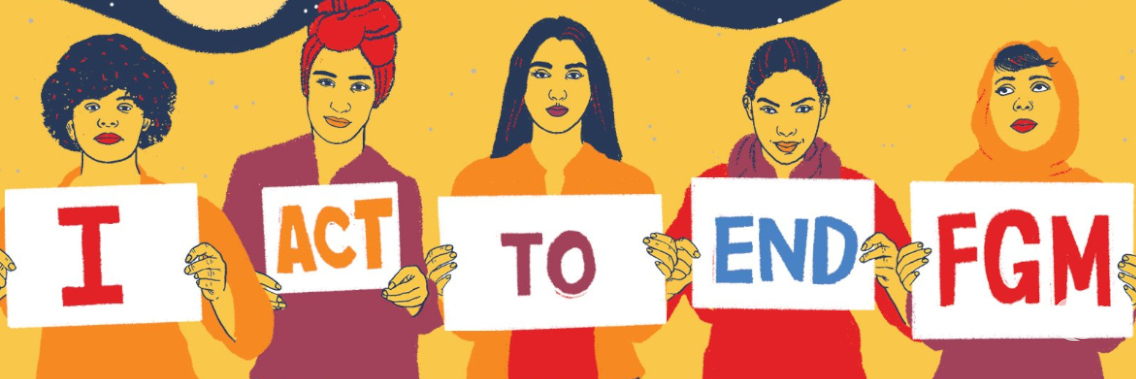
On International Day of Zero Tolerance for Female Genital Mutilation, 6 February, take a look at how action and understanding around FGM has evolved in recent decades, take stock of global trends and progress, and amplify the voices of survivors and activists the fight.
Although the origins of the practice are unclear, FGM has been followed by many different peoples and societies across time and space. The practice is thought to be over 2,000 years old and has been reported in almost every region of the world.
FGM was officially recognized as a form of violence against women and a violation of human rights in the 1993 Declaration on the Elimination of Violence against Women.
In 1995, the Beijing Declaration and Platform for Action advanced the international community’s commitment to ending FGM by pledging governments’ support to enact and enforce anti-FGM legislation and to assist the non-governmental, community, and religious organizations’ efforts to eliminate it.
Throughout the 1990s and 2000s, FGM continued to be emphasized in international frameworks, rallying coordinated action to stop the practice, and in 2012, the United Nations General Assembly unanimously adopted the first-ever resolution against FGM.
Opposition to FGM at the international level has been strengthened by rigorous, context-specific research on its underlying factors and far-reaching consequences. According to the World Health Organization, the most commonly cited reasons for practicing FGM include the social pressure to conform to what others do and have been doing, beliefs that being cut increases marriageability, and the misconception that FGM is a religious practice.
Although no religion promotes or condones FGM, it is often perceived as being connected to Islam. However, not all Islamic groups practice FGM and many non-Islamic groups do, including Christians, Ethiopian Jews, and followers of certain traditional African religions.
FGM is a cultural practice, rooted in inequality and discrimination against women and girls. In some places, FGM is seen as part of a girl’s initiation into womanhood and an intrinsic part of a community’s heritage.
Overall support for FGM is decreasing, even in countries where it’s almost universal. There are positive signs of generational changes in the practice: globally, women aged 15–19 years are less likely to have been subjected to FGM than women in older age groups, indicating that the practice is on the decline, and more girls and women are opposed to FGM today than in the past.
Many governments have taken important steps to stamp it out. At least 59 countries have passed laws against FGM, including 26 of the 29 African countries where FGM is most concentrated. However, several states where the practice is rampant, still lack legislation, and even in places where the practice has been outlawed, enforcement is weak and prosecutions are rare.
Furthermore, in the countries where it is most prevalent, populations are growing–and along with them, the number of girls at risk. While undeniable progress has been made, rates are not declining fast enough. An estimated 68 million girls are at risk of being mutilated by 2030.
Original source: UN Women
Published on 04 February 2020