
Add us as your preferred source on Google to see more of our content in Search.
 Add to Preferred Sources
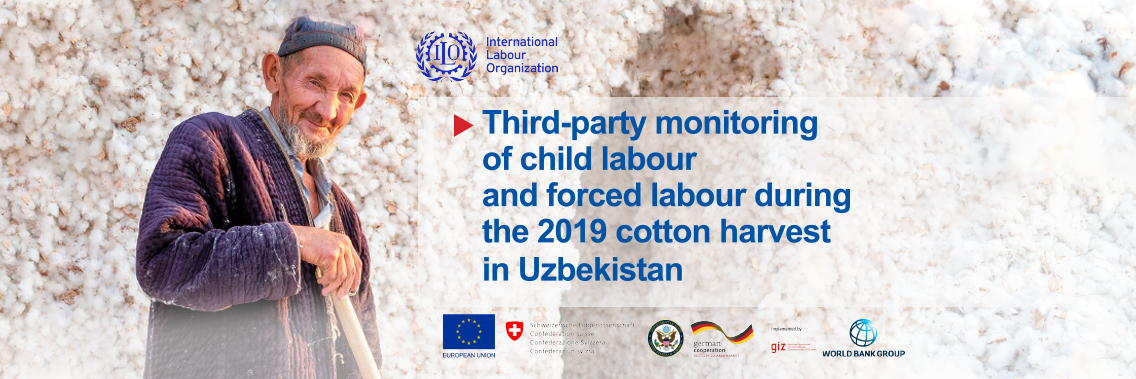
The systematic and systemic use of child labour and forced labour in Uzbekistan’s cotton industry has come to an end, according to a new International Labour Organization (ILO) report.
The report, compiled for the World Bank, shows that the country is making significa nt progress on fundamental labour rights in the cotton fields. Systematic child labour has been eradicated and child labour is no longer a major concern. More than 94 percent of workers in the 2019 cotton harvest worked freely and the systematic recruitment of students, teachers, doctors and nurses has completely stopped.
In 2019, 102,000 pickers were recorded as being in forced labour during the harvest – this number was 40 percent lower than in 2018. However, the involuntary recruitment of staff from state institutions, agencies and enterprises still occurs at the local level.
Cotton pickers’ wages have increased in line with ILO and World Bank recommendations, and the ILO is recommending further increases and improvements in working conditions to attract more pickers. In 2019, a majority of cotton pickers said that working conditions (e.g. transport, food, hygiene, access to water, etc,) had improved compared to the previous year.
The ILO began monitoring the cotton harvest for child labour in 2013. In 2015, as part of an agreement with the World Bank, this work was extended to cover both forced labour and child labour. In 2019, for the first time, the ILO Third-Party Monitoring (TPM) was carried out by independent Uzbek civil society activists using ILO methodology and training. The activists reported that they completed their monitoring without interference.
“Forced labour is completely unacceptable and has no place in modern Uzbekistan,” said Tanzila Narbaeva, Chairwoman of the Uzbek Senate. “We still have work to do but we are encouraged that the reforms are showing such positive results.
The report, Third-party monitoring of measures against child labour and forced labour during the 2019 cotton harvest in Uzbekistan is based on more than 7,000 unaccompanied and unannounced interviews with a representative sample of the country’s 1.75 million cotton pickers.
Read and download the report: Third-party monitoring of measures against child labour and forced labour during the 2019 cotton harvest in Uzbekistan.
Original source: ILO
Published on 05 February 2020