
Add us as your preferred source on Google to see more of our content in Search.
 Add to Preferred Sources
Heads of state, ministers, development leaders, and celebrities called for greater investment in rural areas to accelerate progress to achieve a world free from poverty and hunger in the next 10 years.
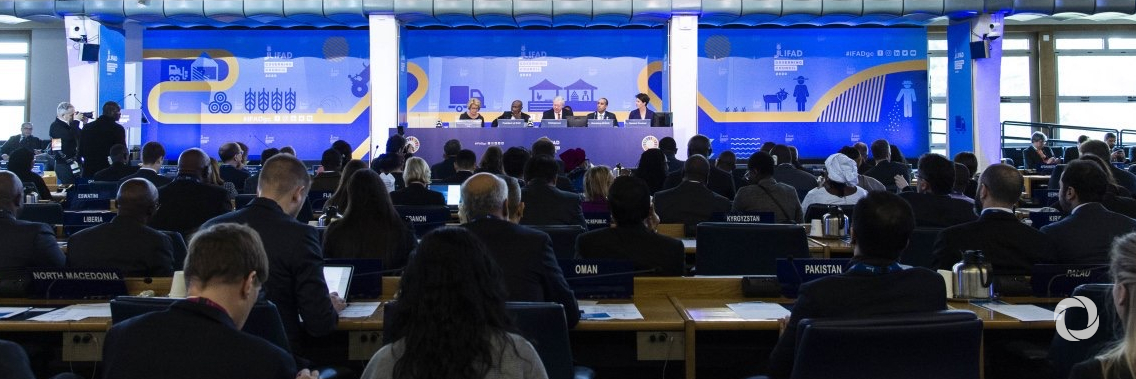
The call was made at the 43rd Session of the Governing Council of the International Fund for Agricultural Development (IFAD) attended by its 177 Member States. This comes at a time when hunger is rising. More than 820 million people go hungry every day, 736 million people still live in extreme poverty, and the wealth gap continues to widen.
IFAD President Gilbert F. Houngbo called reaching the Sustainable Development Goals (SDGs) to eradicate extreme poverty and hunger in 10 years “an abstract vision, a distant mirage” unless serious commitments are made to invest more in rural areas where 79 percent of the world’s poorest people and the vast majority of the hungry life.
“The road ahead is clear: the road to achieving the SDGs must run through rural areas,” Houngbo said. “We must travel to the end of that road and invest in the most marginalized people – small-scale producers, women, youth and indigenous peoples – to deliver on our SDG commitments.”
The President of the Republic of Mali, Ibrahim Boubacar Keïta, opened the two-day event. Like other countries in the Sahel region, Mali is struggling under the dual scourge of conflict and climate change, which is making bumper harvests practically insignificant against the food shortages the country faces, as farmers abandon their fields to escape the crisis.
“Mali will never give up. Neither us nor the other countries of the Sahel. We are bleeding but we shall prevail,” Keïta said, adding that “IFAD has enabled a people faced with the worst kind of attacks to uphold their values and keep their dignity.”
This was echoed by Rodger Voorhies, who leads the Bill & Melinda Gates Foundation’s efforts to alleviate hunger and poverty, who said “we need to move from an aspiration of change, to an action of change that we have promised to smallholders around the world.”
“We have an obligation to focus our efforts and an opportunity to take action and change people’s lives,” Voorhies continued.
IFAD operates in remote rural areas and highly vulnerable regions, where few aid agencies or international financial institutions venture. IFAD launched its Twelfth Replenishment – a year-long consultative process during which IFAD’s Member States come together to agree strategic directions and mobilize funds for IFAD to provide as concessional loans and grants to developing countries.
Original source: IFAD
Published on 11 February 2020