
Add us as your preferred source on Google to see more of our content in Search.
 Add to Preferred Sources
The business development of DEG was again positive in 2019: it committed EUR 1.85 billion to finance private investments in developing and emerging market countries, continuing the previous year’s good figure (2018: EUR 1.87 billion).
DEG mobilised a further EUR 277 million via development banks and private institutional investors. The DEG portfolio grew to EUR 9.0 billion (2018: EUR 8.4 billion).
“The development of new business and the portfolio is particularly encouraging in view of a generally challenging market environment. This also applies to the developmental impact of the investments financed by DEG. For example, our customers employ 2.1 million people in developing countries and generate local income of EUR 92 billion annually, of which around EUR 12 billion is for wages and salaries,” said Christiane Laibach, Chairwoman and designated CEO of DEG’s Management Board.
DEG provided a total of EUR 691 million in 2019 for investments that promote climate and environmental protection (2018: EUR 641 million). An example of this was funding of sustainable energy supply for mobile phone masts in Africa and the Middle East.
In the German business, DEG committed EUR 429 million of its own funds (2018: EUR 399 million). These funds are used to finance direct investments by German companies as well as local companies that purchase German equipment, for example.
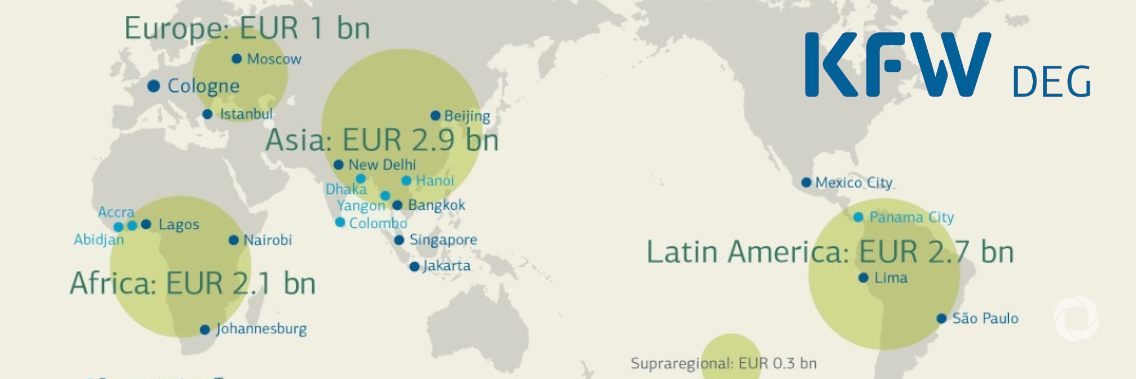
Broken down by continent, most new business in 2019 was in Asia at EUR 632 million. In terms of sectors, the financial sector and manufacturing industry were in the lead. Financing for small and medium-sized enterprises, at EUR 1.1 billion, was again a focus.
DEG expects to continue operating in a dynamic and challenging market environment in 2020. It aims to keep new business at the level of previous years. DEG intends to expand the range of local currency financing and bonds, such as gender bonds.
Original source: KfW
Published on 14 February 2020