
Add us as your preferred source on Google to see more of our content in Search.
 Add to Preferred Sources
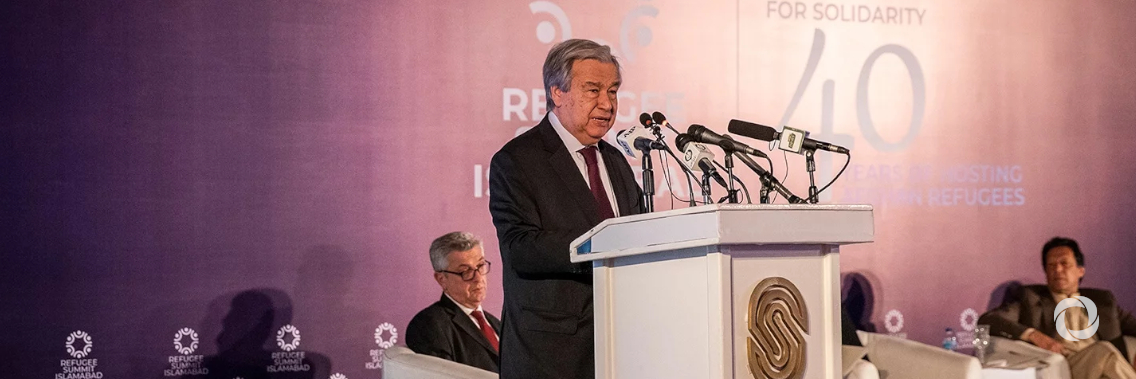
The world must step up and do more for Afghan refugees, UN Secretary-General António Guterres said calling for greater solidarity and support amid one of the world’s largest and longest-running refugee crises.
Guterres spoke at the start of a two-day conference about the fate of millions of Afghans living as refugees, just as word of a possible peace deal offered a fresh glimmer of hope.
Four decades of bloodshed have left millions of Afghans in exile, with neighbouring Pakistan and Iran showing tremendous generosity and hospitality through the years. Yet the world’s attention – and crucially, it’s funding – has shifted to other corners of the globe as massive numbers of people fled places like Syria, South Sudan, Myanmar and Venezuela.
Taking in so many Afghan refugees has put an undeniable strain on host communities in Iran and Pakistan, which are currently home to 90 percent of the 2.7 million Afghans registered as refugees worldwide.
Iran and Pakistan have each taken steps to ensure that refugees have access to public schools and government health-care systems. Dating back many years, these initiatives helped light the way for the Global Compact on Refugees, which aims in part to ease the pressures on host countries and enhance refugee self-reliance.
“Our aim,” Guterres said, “is to galvanize more resources and investments, widen the circle of partners and forge stronger linkages between humanitarian, development and peace investments.”
After decades of conflict, Afghanistan remains a volatile place. More than 400,000 people were displaced inside the country last year – by conflict, drought and other natural hazards. At the same time, just 8,000 refugees were able to return home through the voluntary repatriation programme.
And yet global support for Afghan refugees – and the countries and communities hosting them – has been on the decline. For three years running, UNHCR has received less than half of its required budget for the Afghan situation. These shortfalls, year on year, put a heavy strain on refugees and host communities, as programmes are scaled back, and on host-country governments, which have to deal with the fallout.
Those who pay the biggest price are often the refugee youth. Efforts to educate and empower young Afghans in exile can prepare them to play a leading role in rebuilding their country upon their return. But they require more investment in school infrastructure, teachers and university scholarships.
More international support would also make it possible to scale up training programmes where Afghans and their hosts are learning side by side, developing skills that enable them to earn a livelihood.
Original source: UNHCR
Published on 17 February 2020