
Add us as your preferred source on Google to see more of our content in Search.
 Add to Preferred Sources
A new innovative clean cooking technology, creating heat from a salt-based thermochemical battery, charged by solar power, has been developed at DTU, and UNEP DTU Partnership is part of making sure it gets to those in greatest need.
In 2019, ServedOnSalt approached UNEP DTU Partnership for inputs to their business idea of storing solar-generated heat in salt-based sustainable stoves. In collaboration, ServedOnSalt and UNEP DTU Partnership won a £26,000 grant from the UK-funded Modern Energy Cooking Services (MECS) research and innovation project, to develop the prototype stove.
In searching for an appropriate application area, ServedOnSalt and UNEP DTU Partnership have partnered with UNHCR to explore the feasibility of rolling out such technology for use in some of the densely-populated refugee camps in rural Africa where fuelwood collection is a major protection risk, and deforestation is threatening the livelihoods of refugees and host communities alike.
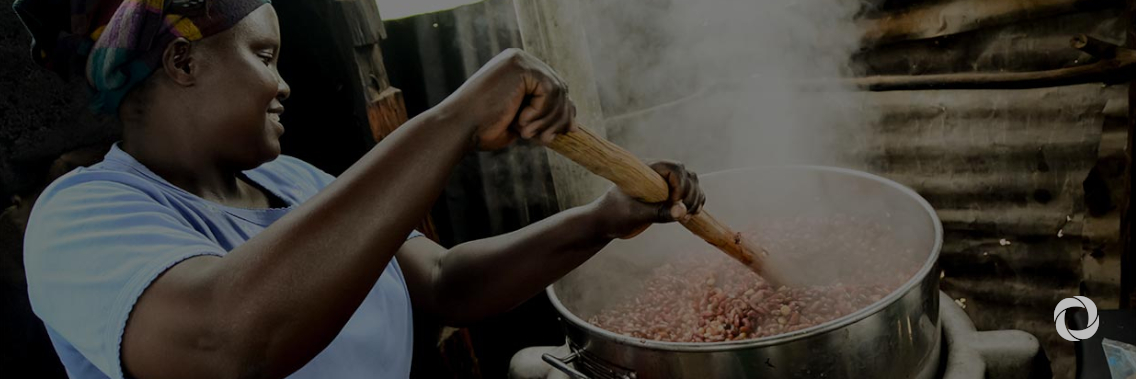
The daily activity of household cooking is a well-known ‘silent killer’ in most low-income countries where 3bn people do not have access to a source of clean and modern energy, instead, they rely on the inefficient combustion of biomass fuels which causes 4m deaths per year.
The technology which ServedOnSalt is developing works when water is injected into a salt container, triggering an exothermic reaction that can provide enough heat for up to 4 hours of cooking. Afterward, the salts can be ‘re-charged’ by concentrated solar power or PV to restore the energy.
According to Jakob Øster, a livelihoods officer at UNHCR, the humanitarian sector is well-positioned to lead the transition to clean cooking fuels in Africa, home to more than 30% of the world’s 25m refugees.
“We can leverage the power of cash-based interventions, now widely used to provide support to displaced persons, as a means to overcome the financial barriers to the uptake of clean cooking technologies at the household level.”
In countries with a significant refugee population, the hope is that such research and technology transfer projects will also deliver spill-over benefits for host communities, not least by freeing up huge amounts of time spent collecting firewood which will enable both refugees and host communities to trade and engage in income-generating activities.
Original source: UNEP DTU
Published on 21 February 2020