
FAO advances Global Action to control the spread and damage of a crop-eating pest affecting millions of livelihoods
Add us as your preferred source on Google to see more of our content in Search.
 Add to Preferred Sources
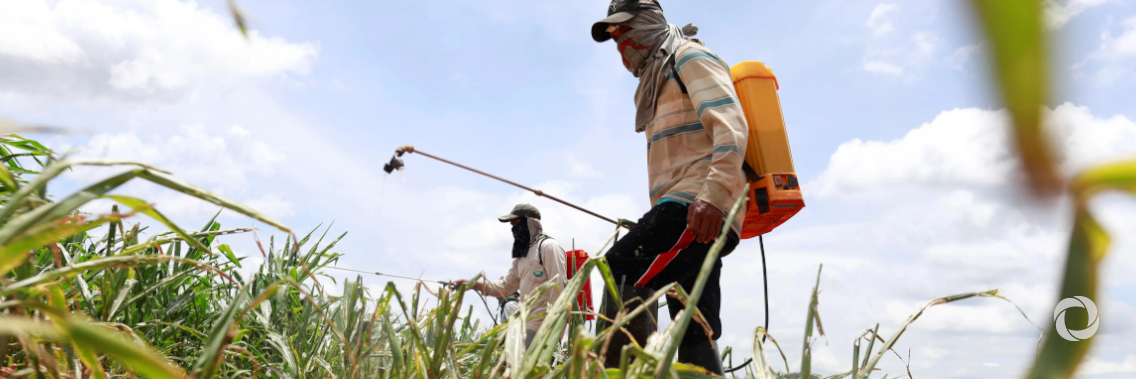
Tools are available to wrestle Fall Armyworm, a voracious invasive species that is ravaging crops in Africa, Asia and the Near East, and it is imperative to intensify coordination to curb the insect’s spread.
“We will need to step up the alliance among key partners from all relevant sectors at the global level,” FAO Director-General QU Dongyu said while opening the first meeting of the Steering Commitee of the Global action for Fall Armyworm Control.
Fall Armyworm, or Spodoptera frugiperda, is a moth native to the Americas that has spread in recent years and has now reached Australia. In its caterpillar stage, the pest feeds on more than 80 crops, with a particular attraction to maize.
As much as 18 million tonnes of maize are lost annually in Africa now, enough to feed tens of millions of people and representing an economic loss of up to $4.6 billion. Over the past three years, FAO has spearheaded 63 Fall Armyworm-related projects, mostly in Africa, establishing many good practices and accumulating much valuable knowledge along the way.
The Global Action is designed to support and scale up those efforts through a strong and innovative coordination mechanism. If Fall Armyworm continues to expand, the role of maize in the world’s food system could be seriously affected, the Director-General said.
The Steering Committee brought together strategic leaders from governments, multilateral institutions, research institutes, civil society and the private sector, from five continents.
The Global Action aims to reduce maize crop losses to 3.0 percent from current levels often 12 times higher.
Original source: FAO
Published on 27 February 2020