

Add us as your preferred source on Google to see more of our content in Search.
 Add to Preferred Sources
New WBG strategy, $2 million to help Asia and the Pacific tackle coronavirus and human rights chief warns of women’s rights complacency. Here is what you missed from last week’s headlines in the international development sector:
New WBG strategy focuses on conflict prevention and partnerships for peace and security in Africa
Urgent action is needed in countries impacted by fragility, conflict and violence (FCV) to end extreme poverty globally, according to the World Bank Group. As crisis situations become increasingly protracted — with dire impacts on people and economies — the World Bank Group released an FCV strategy, which for the first time systematically brings a full suite of financing and expertise to address these challenges in both low-and-middle-income countries.
On the current trajectory, by 2030 up to two-thirds of the world’s extreme poor will live in fragile and conflict-affected countries, according to a World Bank report. Bucking the overall trend of a global decrease in extreme poverty, these countries are seeing sharp increases, threatening decades of progress in the fight against poverty. Fragile and conflict-affected situations take a huge toll on human capital, creating vicious cycles that lower people’s lifetime productivity and earnings and reduce socioeconomic mobility. One in five people in these countries are deprived of money, education and basic infrastructure simultaneously. And the number of people living in close proximity to conflict has nearly doubled in the past 10 years.
“Addressing humanitarian crises requires immediate support and long-term development approaches,” said World Bank Group President David Malpass. “To end extreme poverty and break the cycle of fragility, conflict, and violence, countries need to ensure access to basic services, transparent and accountable government institutions, and economic and social inclusion of the most marginalized communities. These kinds of investments go hand in hand with humanitarian aid.”
ADB approves another $2 million to help Asia and the Pacific tackle coronavirus
The Asian Development Bank (ADB) has approved a further $2 million to help developing countries in Asia and the Pacific contain the outbreak of the novel coronavirus (COVID-19) and improve resilience to this and other communicable diseases.
The funds will be available for all ADB developing member countries in updating and implementing their pandemic response plans, including buying emergency supplies and equipment; assessing health system and economic impacts to improve future resilience; and coordinating better regionally to prevent, detect, and respond to animal and human disease outbreaks.
The work will be conducted in close collaboration with the World Health Organization.
UN human rights chief warns of women’s rights complacency
Michelle Bachelet, the UN High Commissioner for Human Rights, has warned against complacency on women’s rights at an event marking the 25th anniversary of the Beijing Declaration, a landmark agenda for the empowerment of women.
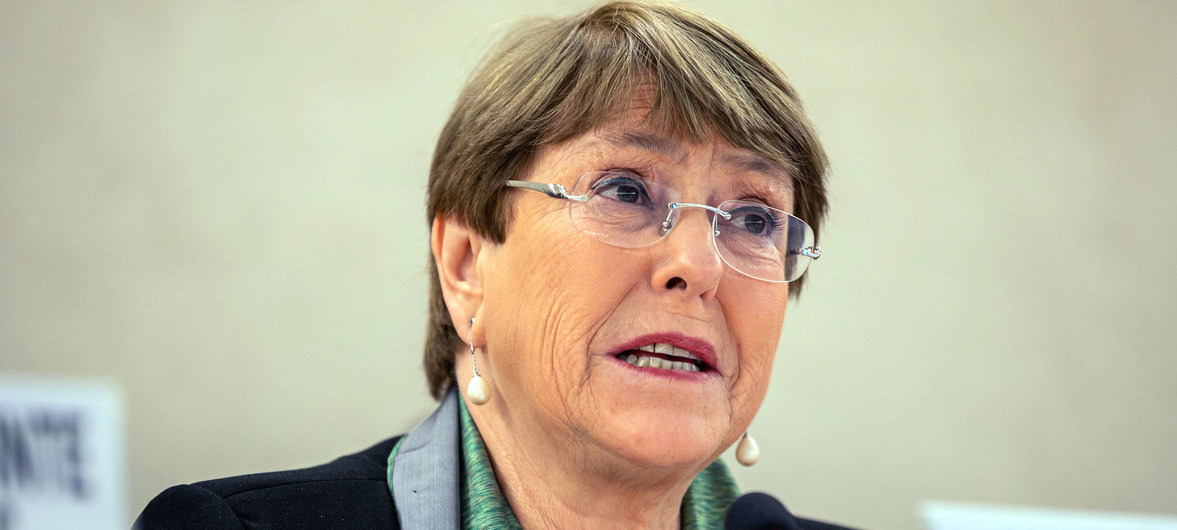
Ms. Bachelet, taking part in a panel discussion, held at the UN Human Rights Council, said that the Beijing Declaration should be celebrated but noted that the Plan of Action agreed at the event is still unfinished.
According to Ms. Bachelet, the risks of setbacks to women’s rights are real and growing. The rights chief noted that whilst the Beijing conference is recognized as a demonstration of strong collective commitment to human rights, the scenario 25 years later is quite different.
“Women’s rights are threatened and attacked” on many fronts, she warned, adding that there over this period there has been “a backlash and the resurgence of gender inequality narratives based on age-old discrimination”.
DevelopmentAid Editorials
Experts’ Opinions | Child abuse on the rise. Reasons and solutions.
In 2018, the UN confirmed that over 24,000 grave violations were committed against children including killing, maiming, sexual violence, abduction, denial of humanitarian access, child recruitment and attacks on schools and hospitals. While monitoring and reporting efforts have been strengthened, this number is more than two-and-a-half times higher than that recorded in 2010. We asked several experts on child protection to share their opinions regarding this increase and what the international community can do to counteract it.
Find out Expert’s Opinions.
Here’s what else has happened
EIB: Last year, the European Investment Bank (EIB) provided €3 billion of new financing that will support €10.7 billion of transformational investment across Africa. Africa is a key priority for the European Union and the European Investment Bank. The European Investment Bank is committed to working with African partners to accelerate and expand new investment that delivers sustainable development, tackles the climate emergency, creates jobs and improves lives across Africa.
Biodiversity: Everything we eat is produced in ways that imply some transformation of the environment, which means we must have careful discussions of the type and scale of transformations we are prepared to accept, FAO Director-General QU Dongyu said in opening remarks to negotiators at a high-level meeting on biodiversity.
Bill and Melinda Gates Foundation: The Bill & Melinda Gates Foundation announced that it is contributing $10 million to the United Nations Food and Agriculture Organization (FAO) to support its work with governments in Ethiopia, Kenya, and Somalia, to combat a locust infestation in East Africa that is posing a significant threat to food production and livelihoods in the region. The foundation is joining several other donors in responding to FAO’s urgent appeal to contain the crisis.
EBRD: The EBRD is joining forces with the Ministry of Tourism and Antiquities of Jordan and the Petra Development and Tourism Region Authority (PDTRA) to promote sustainable tourism and to boost the country’s cultural heritage.
Reports
New WBG strategy focuses on conflict prevention and partnerships for peace and security in Africa
Urgent action is needed in countries impacted by fragility, conflict and violence (FCV) to end extreme poverty globally, according to the World Bank Group. As crisis situations become increasingly protracted — with dire impacts on people and economies — the World Bank Group released an FCV strategy, which for the first time systematically brings a full suite of financing and expertise to address these challenges in both low-and-middle-income countries.
Read and download the report: World Bank Group Strategy for Fragility, Conflict, and Violence 2020-2025.
New report tackles gaping digital divide in the Commonwealth
A report launched in London revealed the yawning digital gap between high and low-income Commonwealth countries while offering solutions to tackle the imbalance.
The report, titled ‘The State of the Digital Economy in the Commonwealth’, shows only 18 percent of people living in low-income Commonwealth countries have internet access, compared to 85 percent in high-income countries.
In fact, just six members – the United Kingdom, Canada, Australia, India, Singapore and Malaysia – account for 85 percent of total online sales to customers, worth US$354 billion in 2015. The same six make up 98.8 percent of the Commonwealth’s total high-tech exports.
Read and download the report: The State of the Digital Economy in the Commonwealth.
Events
2020 Women in Global Development Leadership Forum
Washington DC., USA
6 May 2020
Women in Global Development Leadership Forum is the first and largest forum on women’s leadership, equity, diversity and inclusion in the global development sector.
USAID 2020 Global Education Conference
Washington, D.C, USA
6-10 April 2020
USAID will hold the USAID 2020 Global Education Conference as an opportunity to build relationships and networks across sectors and countries and share collective knowledge, evidence and experience.
2020 Global Youth Biodiversity Summit
Miyazaki, Japan
20-26 April 2020
The Global Youth Biodiversity Network (GYBN) is extremely proud to announce the 2020 Global Youth Biodiversity Summit. The Youth Summit will bring together up to 230 youth from all over the world to connect, collaborate, and share experiences about our work and interest in biodiversity conservation.