
Add us as your preferred source on Google to see more of our content in Search.
 Add to Preferred Sources
Caritas is appealing for €1 million to help the people of Zimbabwe who are going hungry because of drought.
Around half the population (7.7 million people) are expected to not have access to enough nutritious food in 2020 because of poor rains and erratic weather. Many people are coping by eating more starch and less protein and vegetables, limiting food portion sizes and borrowing money. Some families can currently only manage one meal a day.
“We are seeing a lot of malnutrition – not just in rural areas but also urban,” says Marius Zigbwi, Caritas Zimbabwe. Unemployment is at 90 percent and children are dropping out of school because of the food shortages and because their families can’t afford the fees. Donations will help us to stay with people at this difficult time and to close the gap. It’s so important that we ensure that no one is left behind.”
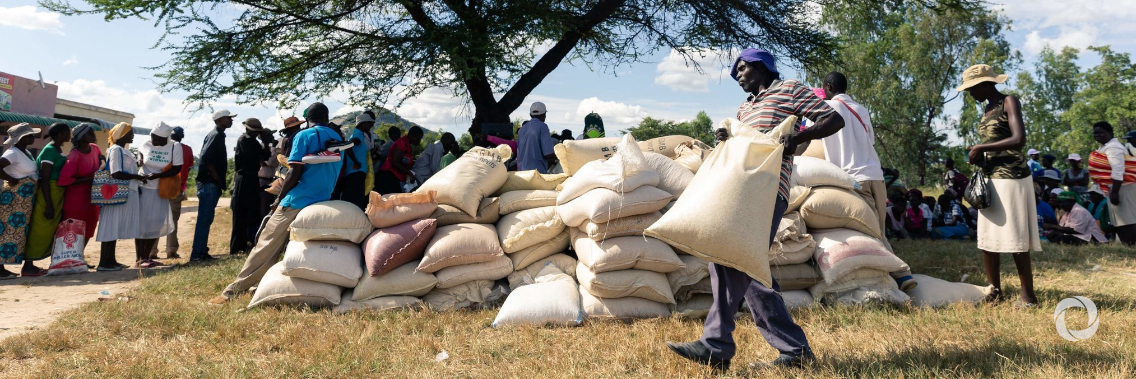
Caritas’ emergency appeal will help 17,000 people for eight months. The initial focus will be on ensuring people have enough to eat. Households will be given enough cereal, pulses and vegetable oil to cover monthly needs. Distributions will take place in the provinces of Hwange, Gweru, Chinhoyi, Gokwe, Bulawayo and Masvingo.
Direct food distributions have been chosen rather than giving cash transfers as the food supply is low in many places and inflation means the cost of food is high.
The last three months of the emergency programme will focus on building people’s resilience to the future impacts of extreme weather. Caritas will give communities seeds that grow in spite of erratic weather such as cowpea, maize and sorghum. Communities will also receive training in sustainable agricultural
The UN World Food Programme has raised the alarm for the wider 16-nation Southern African Development Community where 45 million people are hungry. They say repeated drought, widespread flooding and economic disarray have left the region facing an unprecedented hunger crisis.
Original source: Caritas
Published on 02 March 2020