
Add us as your preferred source on Google to see more of our content in Search.
 Add to Preferred Sources
Bill and Melinda Gates Foundation commits $5 million to help public health agencies, Climate Action is a priority and refugee children protection. Here is what you missed from last week’s headlines in the international development sector:
Bill and Melinda Gates Foundation commits $5 million to help public health agencies in greater Seattle area respond to COVID-19
The Bill & Melinda Gates Foundation announced that it will commit an additional $5 million to help public health agencies in the greater Seattle region enhance their capacity to detect novel coronavirus (COVID-19) in King County, Snohomish County and other surrounding communities.
“Early detection plays an essential role in helping public health authorities identify and treat people with COVID-19, take steps to safely isolate them and reduce transmission within the community,” said Gates Foundation CEO Mark Suzman. “The Gates Foundation deeply appreciates the efforts that local, state, and federal public health authorities have invested in responding to this outbreak, and we are eager to contribute our knowledge and resources to the effort.”
The foundation will work in coordination with Public Health-Seattle & King County, the Washington State Department of Health, and the U.S. Centers for Disease Control and Prevention to help them enhance their capacity to detect and treat COVID-19 and guide public health efforts to reduce transmission. Part of this effort will explore how the resources of the Seattle Flu Study could be pivoted toward emergency efforts to monitor and respond to COVID-19.
Climate Action is a priority and a driver of world affairs
Climate action will be both a priority and a driver of world affairs through the coming decade, according to United Nations Secretary-General António Guterres.
Presenting his 2020 programme and plans for the Decade of Action to diplomats and journalists, Mr. Guterres drew on World Meteorological Organization data to highlight the “vicious circle” of climate change.
“Analysis from the World Meteorological Organization showed that 2019 was the second hottest year on record, and that ocean heat content is at a record level,” he told the UN Group of Friends on Climate and Security.
2019 concluded the warmest five-year and ten-year periods on record, with accelerating sea-level rise, shrinking ice and much high-impact weather. The average global temperature last year was 1.1°C above the pre-industrial level. Each decade since the 1980s has been warmer than the previous one.
Protecting children must be top priority, in latest refugee surge response
The reported death of a child, among nearly 50 people aboard a boat which capsized off the Greek island of Lesvos, is a tragic reminder about the harrowing journeys being undertaken by the youngest refugees and migrants seeking safety in Europe.
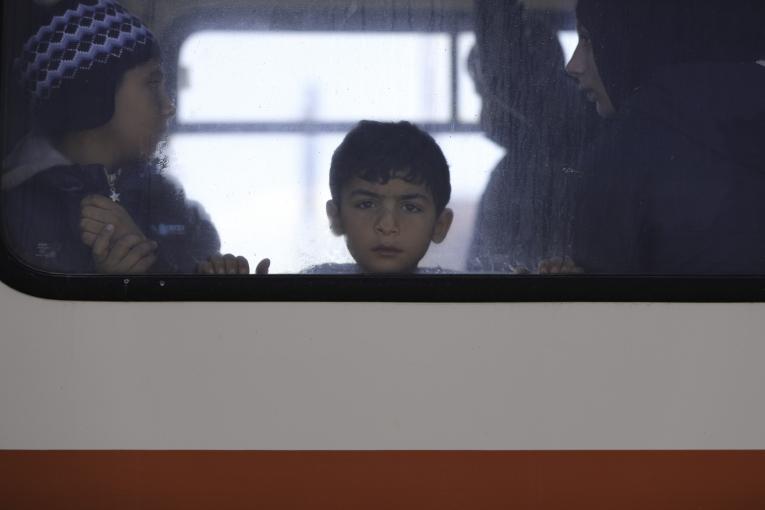
Whether at sea, at border crossings or in the conflict-affected areas the children are fleeing, children are the first casualties. In recent weeks, escalating violence in northwest Syria has displaced more than 575,000 children. Of the several thousand people currently concentrated near Edirne and along the Turkish-Greek land border, an estimated 40 percent are women and children. States must do everything possible to prevent further harm to the most innocent.
DevelopmentAid Editorials
Experts’ Opinions| The role of DFIs in international development. Addressing global challenges.
Development Finance Institutions (DFIs) are government-controlled institutions that invest in sustainable private sector projects. Their objective is to encourage development in developing countries while remaining financially viable themselves. The role of DFIs is rapidly growing in international development. Let’s see what our consultants think about this.
Find out Expert’s Opinions.
Here’s what else has happened
Germany: The German Federal Ministry for Economic Cooperation and Development (BMZ), through the German Development Bank KfW, has contributed EUR 50 million ($54 million) to a resilience-building programme to be implemented by the Food and Agriculture Organization of the United Nations (FAO), the United Nations Children’s Fund (UNICEF) and the United Nations World Food Programme (WFP) in the east of the Democratic Republic of the Congo (DRC).
World Bank: A project to improve access to, and quality of, basic education nationwide in Myanmar was approved by the World Bank’s Board of Executive Directors. The project, financed by a US$100 million credit from the International Development Association (IDA), will be implemented over four school years.
UNFPA: UNFPA, the UN sexual and reproductive health agency, is closely monitoring and working with partners, governments and UN agencies to address the outbreak of the new coronavirus disease (COVID-19), which has been declared a public health emergency of international concern by the World Health Organization (WHO).
UN: United Nations agencies and NGO partners launched the 2020 Joint Response Plan (JRP) for the Rohingya humanitarian crisis. Building on the efforts and success of previous years, the appeal aims to raise US$877 million to respond to the needs of approximately 855,000 Rohingya refugees from Myanmar and over 444,000 vulnerable Bangladeshis in the communities generously hosting them.
Reports
Almost 90% of men/women globally are biased against women
How big and thick is the Glass Ceiling? New analysis suggests that it covers all aspects of women’s lives – including the household – and that it is constructed, not of glass, but of pervasive bias and prejudice against women held by both men and women worldwide.
These were the findings behind the new Gender Social Norms Index released by the United Nations Development Programme (UNDP). This index measures how social beliefs obstruct gender equality in areas like politics, work, and education, and contains data from 75 countries, covering over 80 percent of the world’s population.
Read and download the report: Gender Social Norms Index
25 years of uneven progress: Despite gains in education, world still a violent, highly discriminatory place for girls
More girls are going to school and staying in school than ever before, but remarkable gains in education have made little headway in helping shape a more equal, less violent environment for girls, UNICEF, Plan International and UN Women warned in a new report.
The report, released ahead of the 64th session of the Commission on the Status of Women, notes that the number of out-of-school girls has dropped by 79 million in the last two decades. In fact, girls became more likely to be in secondary school than boys in just the last decade.
Read and download the report: A New Era for Girls: Taking stock on 25 years of progress.
Global economy faces gravest threat since the crisis as coronavirus spreads
The coronavirus Covid-19 presents the global economy with its greatest danger since the financial crisis, according to the OECD’s latest Interim Economic Outlook.
Covid-19 is spreading from China to other regions causing human suffering and economic disruption. It is raising health concerns and the risk of wider restrictions on the movement of people, goods and services, falls in business and consumer confidence and slowing production. The Interim Outlook presents both a best-case scenario in which the extent of the coronavirus is broadly contained and a “domino” prospect of contagion that is more widespread.
Read and download the OECD’s Interim Economic Outlook -Coronavirus: the world economy at risk.
Events
Digital Disruption in Agriculture Forum 2020
Addis Ababa, Ethiopia
22-23 April 2020
The Digital Disruption in Agriculture Forum is an annual gathering of key stakeholders in the fields of technology and agriculture. The forum will help identify digital tools and services that can be successfully used in Ethiopia. Digital technologies in agriculture can lead to greater efficiencies that help countries leapfrog agricultural advances and overcome fragmentation in markets dominated by small-scale producers.
Civil Society Policy Forum 2020
Washington, DC, USA
14-17 April 2020
The Civil Society Policy Forum (CSPF) has become an integral part of the International Monetary Fund and World Bank Group Spring and Annual Meetings, providing an open space for Civil Society Organizations (CSOs) to dialogue and exchange views with World Bank Group and IMF staff, their peers, government delegations, and other stakeholders on a wide range of topics.
World Water Week 2020 – “Water and Climate Change: Accelerating Action”
Stockholm, Sweden
23-28 August 2020
The theme for 2020 is “Water and Climate Change – Accelerating Action” with a focus on innovation, science and actions needed to tackle one of the greatest threats to our planet and our very existence.