
Add us as your preferred source on Google to see more of our content in Search.
 Add to Preferred Sources
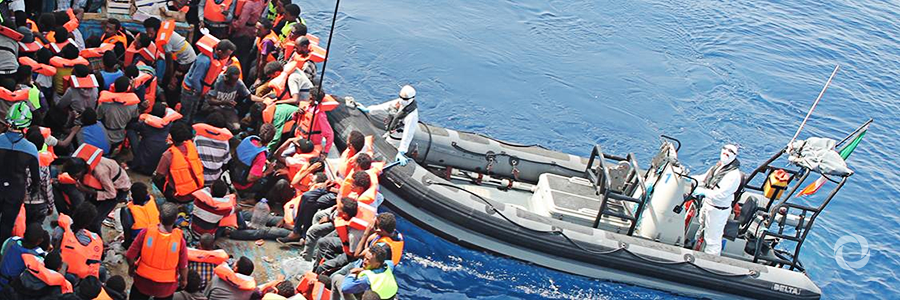
The number of refugees and migrants entering the European Union is low compared with the bloc’s population. Nations in Africa and Asia are absorbing many more. Migration graphic.
“The number of refugees in Europe is a classic example of perception versus reality,” says geographer Nikola Sander at the University of Groningen in the Netherlands.
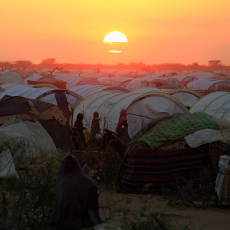 Experts also question assessments of the global situation. The UN refugee agency (UNHCR), declared in 2015 that the world was “witnessing the highest levels of displacement on record”. Around 40 million people were ‘internally displaced’ within their home countries. But researchers say that such estimates are often unreliable. Refugee numbers are easier to track. The UNHCR estimates that there were 21.3 million refugees in 2015; that is only slightly higher than the 1992 figure of 20.6 million, when the global population was just two-thirds of today’s. Researchers also warn about misinterpreting estimates of international migrants — those who move for economic or other reasons. These numbers can be problematic because the most widely cited UN figures are cumulative. Guy Abel, a statistician at the Vienna Institute of Demography, has studied the dynamic flow and found that the number of people migrating has remained stable over the past 50 years. His latest estimates indicate that migration rate, as a share of global population, has dropped to its lowest point in 50 year.
by Declan Butler
Source: Nature. International weekly journal of science.
Read the full report.
1 March, 2017.