
Add us as your preferred source on Google to see more of our content in Search.
 Add to Preferred Sources
As some European countries begin to relax lockdown measures following weeks of confinement introduced to halt the spread of the new coronavirus, the World Health Organization (WHO) has warned of a potential “second wave” of COVID-19 infections.
In an update to its strategic advice to Governments, the UN health agency maintained that without additional measures including greater support for health systems, “the premature lifting of physical distancing measures is likely to lead to an uncontrolled resurgence in COVID‑19 transmission and an amplified second wave of cases”.
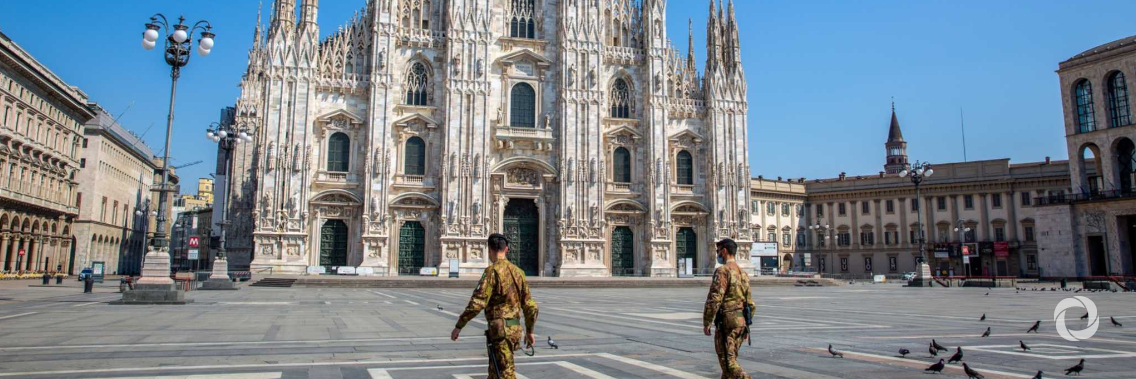
To date, Austria, Denmark, Spain and Italy have relaxed some lockdown measures.
WHO repeated its recommendation that all countries should pursue more aggressive tactics against the disease, namely find, test, isolate, treat and trace potentially infected individuals.
More should be done to identify those with mild disease symptoms or contacts of such cases, it explained.
“Countries must do everything they can to stop cases from becoming clusters and clusters from becoming explosive outbreaks. They must put in place the capacities for testing and diagnosis, isolation, contact tracing and quarantine; they must engage everyone in the response.”
The new advice from WHO also highlights the coordinated global support that is required to tackle COVID‑19, while complementing COVID‑19 response plans in emergency settings.
Ninety percent of cases were in Europe and the United States, “so we are certainly not seeing the peak yet”, spokesperson Dr. Margaret Harris told journalists via videoconference.
Although countries that had experienced very large outbreaks including Spain and Italy had started to see a “slight deceleration” in the number of infections, others – such as the UK and Turkey – were still seeing an increase, “so it’s a very mixed picture”, she added.
Countries should only start to ease restrictions on people’s movement once they are sure that transmission is controlled, the WHO spokesperson explained.
The only way to do this “is if you’ve got the ability to test for that virus and you’ve got the ability to track all the contacts of the people that you know who are currently infectious, so you’ve got the ability to separate those who are infected from those who are healthy”.
WHO’s guidance also extends to public spaces including schools and workplaces, where the authorities and employers should ensure that people can work “without being close together”, or from home.
The agency’s final recommendation is that communities continue to be informed about the stay-at-home measures and why they were needed.
Despite the lifesaving benefits of these measures, WHO nonetheless highlighted the “profound negative impact on individuals, communities, and societies” of lockdown measures, as social and economic life is brought “to a near stop”.
Insisting on the “urgent need” for a resumption of “some parts of economic and social life”, the Geneva-based agency cautioned that the social and economic benefits of any such transition would need to be weighed against the risk of the virus spreading.
“Without careful planning, and in the absence of scaled-up public health and clinical care capacities, the premature lifting of physical distancing measures is likely to lead to an uncontrolled resurgence in COVID‑19 transmission and an amplified second wave of cases,” it said.
Original source: UN News
Published on 15 April 2020