
IOM launches USD 499 million expanded COVID-19 response plan to help address critical socio-economic impacts of pandemic
Add us as your preferred source on Google to see more of our content in Search.
 Add to Preferred Sources
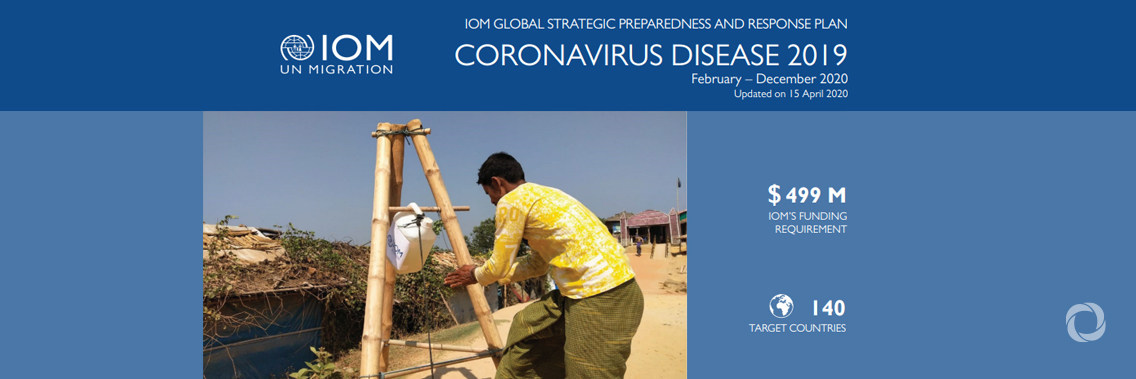
As the number of new coronavirus disease (COVID-19) cases continues to rise, the International Organization for Migration (IOM) has expanded the scope of its Global Strategic Preparedness and Response Plan (SPRP) to include far-reaching interventions that aim to mitigate the dire health and socio-economic impacts of the pandemic. A revised appeal was launched for USD 499 million to support vital preparedness, response and recovery activities in over 140 countries.
The newly-launched SPRP – an update to the previous IOM appeal for USD 116.1 million – broadens the Organization’s approach to encompass COVID-19 mitigation efforts in humanitarian settings and numerous other contexts where people on the move are likely to be gravely affected by the pandemic’s impacts. These initiatives are being pursued collectively with all concerned governments, UN partners and the NGO community.
“IOM is calling for greater commitment from international donors that will allow us to better alleviate the dire effects that COVID-19 is having on some of the world’s most vulnerable communities,” said IOM’s Director General António Vitorino, while expressing gratitude for the contributions to date.
As part of the UN’s global effort to tackle the health, social and economic consequences of the current crisis, IOM has been working with governments and partners to ensure that migrants, regardless of their legal status, returnees and forcibly displaced persons across the world are included in local, national and regional preparedness, response and recovery efforts.
“When migrants and displaced communities are excluded from national response plans and services, particularly health care, everyone is at greater risk,” said Director General Vitorino.
Migrants will remain among the most vulnerable to loss of economic opportunities, eviction and homelessness, as well as stigmatization and exclusion from essential services. This will have a particularly drastic effect in countries where migrant workers contribute to poverty reduction, through remittances sent back home that allow their families to access basic services, medical care and education.
Millions of displaced and migrant populations living in camps and other overcrowded settings, many of whom are caught in conflict, are also highly vulnerable due to limited access to services and knowledge on how to protect themselves and their loved ones.
IOM’s revised plan, which remains aligned with the WHO’s COVID-19 plan and the COVID-19 UN-coordinated global humanitarian plan, focuses on four strategic priorities: (1) effective coordination and partnerships as well as mobility tracking; (2) preparedness and response measures for reduced morbidity and mortality; (3) efforts to ensure that affected people have access to basic services, commodities and protection; and (4) mitigation of the socio-economic impacts of COVID-19.
Original source: IOM
Published on 15 April 2020