
West and Central Africa: UNHCR steps up efforts as combined challenges of conflict and coronavirus threaten millions of people
Add us as your preferred source on Google to see more of our content in Search.
 Add to Preferred Sources
UNHCR, the UN Refugee Agency, has stepped up efforts across West and Central Africa to protect millions of vulnerable people who are facing a renewed risk from the combined effects of conflict and the coronavirus pandemic.
COVID-19 has exacerbated challenges in a region already dealing with one of the world’s largest humanitarian crises, involving over nine million forcibly displaced people. The pandemic has led to border closures and added an increased strain on fragile health systems and weak economies.
UNHCR has stepped up support to governments to help address the deteriorating humanitarian crisis. Our focus is on ensuring access to safety and trying to mitigate the effects of the pandemic.
West and Central Africa has one of Africa’s largest displaced population with some 5.6 million internally displaced, 1.3 million refugees, 1.4 million returnees who still need assistance, and 1.6 million Stateless.
So far, all the 21 countries of the region have reported a total of over 5,000 COVID-19 cases and more than 100 deaths since the first detection on February 28, 2020. So far, only host populations appear to have been affected with no coronavirus cases so far reported among the displaced.
However, a lack of concerted and coordinated efforts to prevent an outbreak could lead to a humanitarian catastrophe with a sharp increase in the number of those affected.
In West Africa’s Sahel region, armed conflict and attacks on civilians have displaced nearly 3 million people, nearly one million of whom since January 2019, and more than 5 million people are now facing food shortages.
Countries have officially imposed various levels of restriction on international movements from complete to partial border closures and mandatory self-quarantine on travellers arriving in-country.
Although, COVID-19 related restrictions are not targeted at refugees and asylum-seekers specifically, UNHCR has expressed concern that measures in the region could see people in need of international protection attempting even more risky and dangerous border crossings.
The restriction on movement, a slowdown or even halt in economic activity will likely have a greater impact on refugees and the internally displaced people since the majority are involved in the informal sector which historically is one of the most affected during public health outbreaks.
In addition to the precarious security (especially in the Sahel and the Lake Chad Basin), the restrictions by COVID-19 are also hindering humanitarian efforts to support and assist people in need.
In the Central African Republic, UNHCR staff report armed groups forcing displaced people to return to their places of origins in some localities, blaming them for the potential spread of COVID-19.
In Burkina Faso, the situation is particularly dramatic due to the unprecedently high displacement levels there. UNHCR is now exploring the possibility of relocating some of those living in Dori to the Goudoubo refugee camp, which is currently empty but has water, sanitation and health facilities.
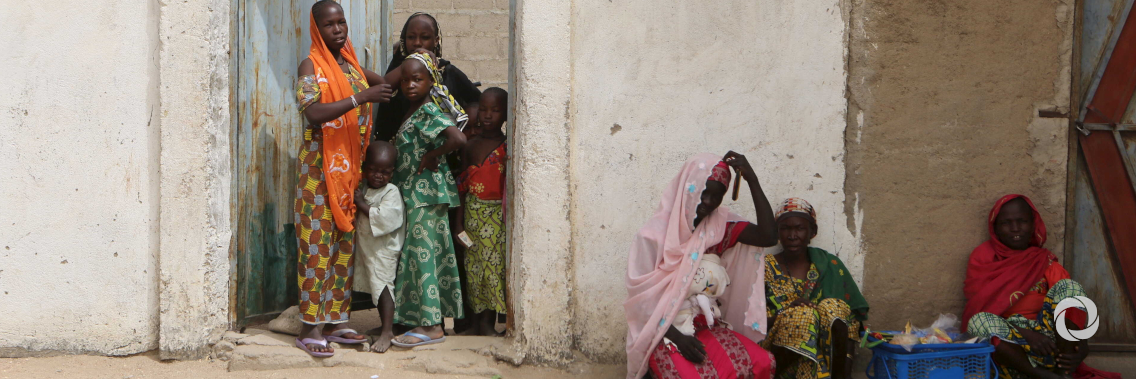
Internally displaced camps in Borno state are overcrowded, making social distancing impossible. UNHCR is working with the UN Development Programme to help with the expansion of camps and fences in Banki, Ngala and Bama.
Urgent support is needed to fill major gaps in the region, needing more trained health personnel in emergency response and adequate treatment units, particularly in remote areas hosting refugees and displaced people.
As part of the broader UN Global Humanitarian Response Plan, UNHCR has issued an Emergency Appeal requesting US$255 million for life-saving interventions and preparations in response to COVID-19.
UNHCR’s Bureau for West & Central Africa covers 21 countries: Benin, Burkina Faso, Cameroon, Cape Verde, Central African Republic, Chad, Côte d’Ivoire, Equatorial Guinea, Gabon, the Gambia, Ghana, Guinea, Guinea Bissau, Liberia, Mali, Niger, Nigeria, São Tomé and Príncipe, Senegal, Sierra Leone and Togo.
Original source: UNHCR
Published on 17 April 2020