
Add us as your preferred source on Google to see more of our content in Search.
 Add to Preferred Sources
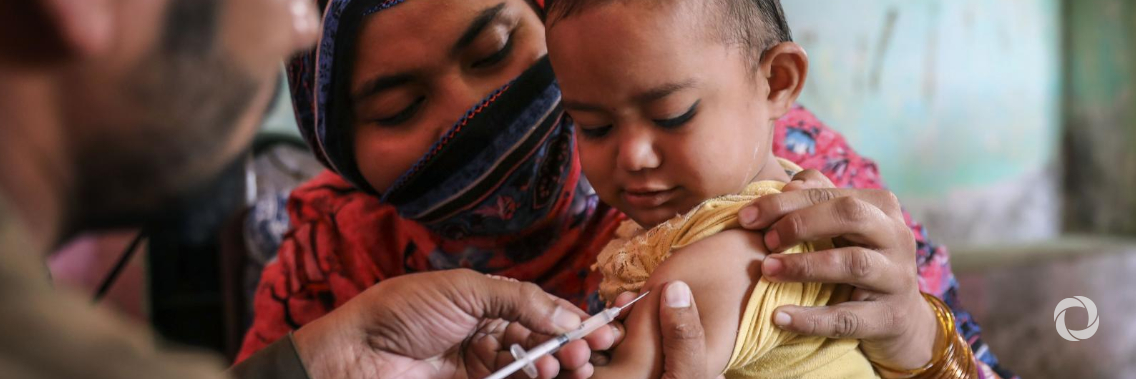
South Asia could face yet another health emergency if children across the region do not receive their life-saving vaccine shots, UNICEF warned.
Almost a quarter of the world’s unimmunized or partially immunized children—about 4.5 million children—live in South Asia. Almost all of them, or 97 percent, live in India, Pakistan and Afghanistan. With lockdowns in place as a part of the novel coronavirus (COVID-19) response, routine immunizations have been severely disrupted, and parents are increasingly reluctant to take their children to health centers for routine jabs. Sporadic outbreaks of vaccine-preventable diseases, including measles and diphtheria, have already been seen in parts of Bangladesh, Pakistan and Nepal.
The South Asia region is also home to two of the last polio-endemic countries in the world, Afghanistan and Pakistan.
“Vaccine stocks are running dangerously low in some countries of the region as supply chains have been disrupted with travel bans and cancelled flights. The manufacturing of the vaccines has also been disrupted, creating additional shortages,” says Paul Rutter, Regional Health Advisor for UNICEF Regional Office for South Asia (ROSA).
Many of the health facilities throughout the region, where millions of children are normally vaccinated, have been closed and outreach sessions have been suspended, adding to the challenge.
Across the region, national mass vaccination campaigns have been postponed. Bangladesh and Nepal have postponed their national measles and rubella campaigns while Pakistan and Afghanistan have suspended their polio campaigns.
UNICEF strongly recommends that, where immunization campaigns are suspended, governments begin rigorous planning now to intensify immunization activities once the COVID -19 pandemic is under control.
Original source: UNICEF
Published on 28 April 2020