
Add us as your preferred source on Google to see more of our content in Search.
 Add to Preferred Sources
A major UN-led initiative is underway to secure supplies of key medical equipment for 135 low to medium-income countries facing down the COVID-19 pandemic, the World Health Organization (WHO) said.
The COVID-19 taskforce initiative follows a direct request to WHO from UN Secretary-General António Guterres to coordinate the Organization’s response to the new coronavirus.
It comes amid unprecedented global shortages of critical supplies, skyrocketing prices and export bans, said Paul Molinaro, Chief, Operations Support and Logistics, WHO Health Emergencies Programme.
“The demand has obviously increased in those markets 100 or 200 times normal demand. On the supply side we saw a lot of shutdowns in manufacturing, we saw a lot of export controls, we saw the international air transport system on which we’re quite dependent for the movement of cargo, gradually shut down, so we’re at the point where we need to look for solutions to this,” Mr. Molinaro said.
As part of the collective effort by the UN and public and private partners, a dedicated “COVID-19 Supply Portal” is set to launch within days, offering countries the opportunity to submit supply requests via a single platform.
This will enable the humanitarian supply chain system “to plan and coordinate allocation of critical supplies” to those 135 countries deemed to be most vulnerable, WHO said in a statement: “We need to streamline demand at country level to really look at the highest priority and to try and get the numbers to something manageable and coordinated,” Mr. Molinaro said, highlighting the first of the initiative’s four priorities.
“Step two is collaborative procurement amongst ourselves in the UN and some of our key partners in approaching the market together. This gives us a bigger voice, particularly in a constrained market with a lot of intense competition”, he added.
The third part is the allocation process based on vulnerabilities and gaps and on critical needs. And then the fourth step – in light of difficulties with transportation – is to create a unified transport system, and this is something UN partners are currently doing, particularly WFP.
To date, WHO has distributed 1.1 million tests to 129 countries, and “we have another 1.5 million on the way”, Mr. Molinaro said, noting that the new supply chain initiative should secure a further nine million tests, which would be allocated as needed.
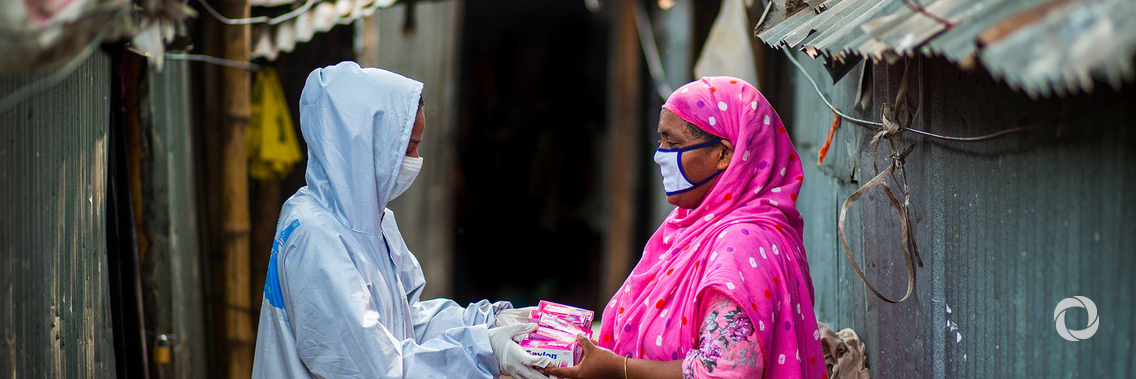
In addition, partner agency UNICEF (the UN Children’s Fund) has shipped supplies to 44 countries including 1.2 million surgical masks, more than 320,000 respirators, 6.4 million surgical gloves and over 250,000 gowns. UNICEF has also shipped oxygen concentrators, basic surgical equipment, stethoscopes, medication and nutrition to the Democratic Republic of the Congo (DRC), along with personal protective equipment to Iran and Venezuela, and a 50-bed COVID-19 isolation and treatment unit to Cox’s Bazar, Bangladesh.
According to WHO, the taskforce aims to procure 75 million face masks, 50 million respirators, 28 million surgical gloves, 10 million face shields and three million goggles for distribution. Discussions are also ongoing with the Jack Ma Foundation for 100 million surgical masks and one million respirators, WHO said in a statement.
The positive development comes amid concerns about border closures or delays which are already impacting aid deliveries, including at the border between Uganda and Kenya.
Moving forward, the COVID-19 taskforce’s strategy is to speak up for those countries that don’t have the means to access life-saving supplies.
Original source: UN News
Published on 28 April 2020