
Add us as your preferred source on Google to see more of our content in Search.
 Add to Preferred Sources
On 25 March 2020, the UN and its partners launched a US$2 billion global humanitarian appeal to respond to COVID-19 in some of the world’s most vulnerable countries.
Since then, OCHA’s pooled funds have been at the forefront of channeling resources to fight the pandemic. Together, they have provided $164 million across 36 countries, helping humanitarians mobilize and reach people most in need.
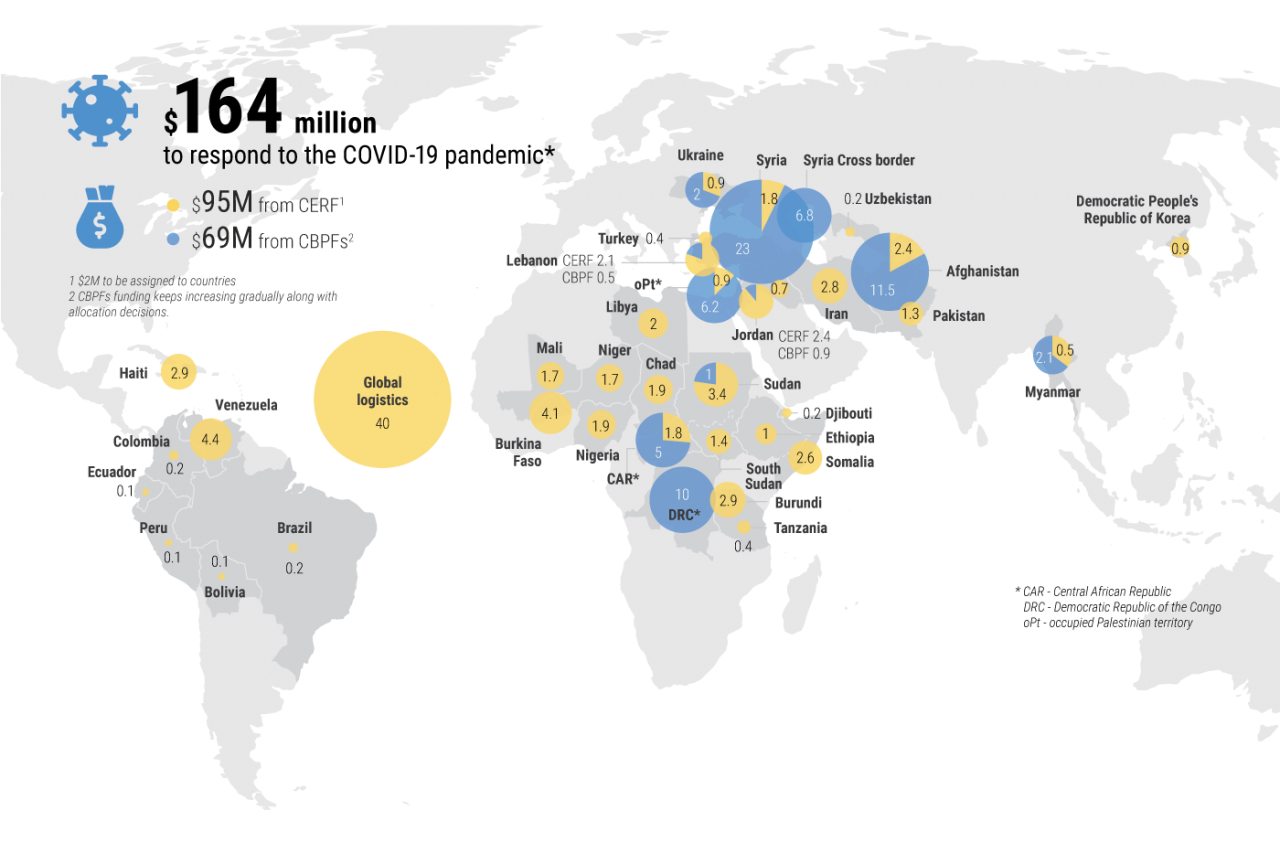
With two global allocations, CERF has released a total of $95 million to kick-start efforts by helping to contain the spread of the virus, maintaining supply chains, and providing assistance and protection to the most vulnerable people, including women and girls, refugees and internally displaced persons. Maximum flexibility has been granted to all recipients in the use of CERF funding, within the parameters of the Humanitarian Response Plan (HRP), to ensure a time-critical response with the greatest possible impact.
A large portion of this funding is supporting the UN World Food Programme (WFP) in maintaining essential air services to facilitate the critical movement of humanitarians and maintain supply chains of life-saving cargo so that humanitarian operations can continue and aid workers are equipped to respond to the humanitarian consequences of COVID-19.
CERF is also supporting preparedness efforts, for example in Nigeria’s Borno State, where funding is enabling the International Organization of Migration (IOM) to build 90 quarantine spaces for potential individuals with COVID-19 symptoms. These efforts will help to decrease the risk of an outbreak in the densely populated camps and host communities.
The Country-based Pooled Funds (CBPFs) are supporting efforts to fight the pandemic through emergency allocations and reprogramming of pre-existing projects. As of 25 April, 12 funds have allocated a total of $69 million in response to the disease, supporting preparedness, community engagement, access to emergency health care and the delivery of essential services such as food, cash and medical equipment.
Some 51 percent of the funding will be granted directly to non-governmental organizations (NGOs), leveraging their knowledge and access to best help those in need. CBPFs have also introduced temporary arrangements that will specifically benefit national NGOs.
Humanitarian organizations continue to work hard to reach people most in need, both with specific COVID-19 assistance but also to continue their life-saving work for some 117 million women, men and children caught in conflict, poverty and climate-related emergencies. The combined funding from CERF and CBPF has been vital in kick-starting, scaling up or sustaining these urgent efforts.
Original source: UNOCHA
Published on 28 April 2020