

Add us as your preferred source on Google to see more of our content in Search.
 Add to Preferred Sources
Disrupted global immunization, G20 suspends debt payments for the poorest countries and workers now and after lockdowns ease. Here is what you missed from last week’s headlines in the international development sector:
Over 13 million children did not receive any vaccines at all even before COVID-19 disrupted global immunization
As the world waits desperately for a vaccine, the COVID-19 pandemic is continuing to surge across the globe. Millions of children are in danger of missing life-saving vaccines against measles, diphtheria and polio due to disruptions in immunization services.
At last count, most countries had suspended mass polio campaigns and 25 countries had postponed mass measles campaigns, as per recommended guidance.
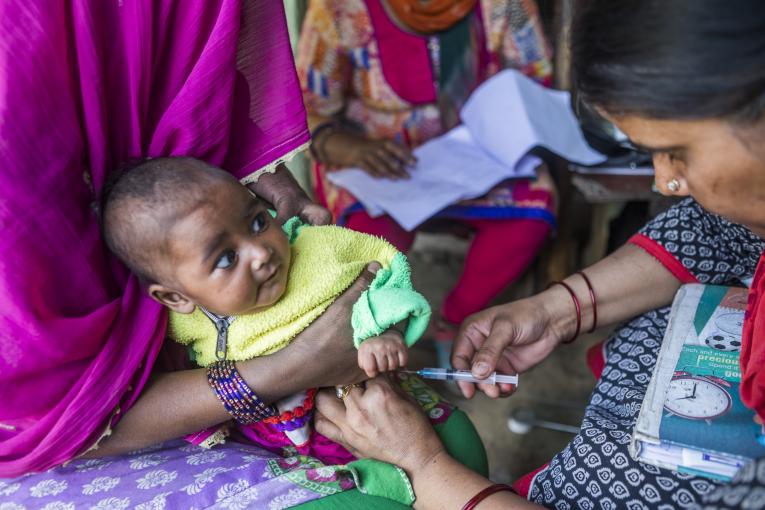
Even before the COVID-19 pandemic, measles, polio and other vaccines were out of reach for 20 million children below the age of one every year. Over 13 million children below the age of one globally did not receive any vaccines at all in 2018, many of whom live in countries with weak health systems. Given the current disruptions, this could create pathways to disastrous outbreaks in 2020 and well beyond.
“The stakes have never been higher. As COVID-19 continues to spread globally, our life-saving work to provide children with vaccines is critical,” said Robin Nandy, UNICEF Principal Adviser and Chief of Immunization. “With disruptions in immunization services due to the COVID-19 pandemic, the fates of millions of young lives hang in the balance.”
G20 suspends debt payments for the poorest countries from May 1
From May 1st, poor countries will have their debts suspended. This decision was taken by the G20 on Wednesday (April, 15) and represents a global approach to the consequences of the corona crisis which may be particularly serious for the poorest countries. The Jubilee Debt Campaign group has described the move as a first step, but called for much more. The UK-based charity estimates that the delay will cover $12bn of payments. In all, 77 countries are due to benefit from the agreement.
The German Finance Minister, Olaf Scholz, who announced the agreement, labeled the suspension as an act of international solidarity of historical importance. According to him a delay for both principal repayments and interest payments will be granted until 31 December (2020). The so-called Paris Club which includes 22 major creditor countries will also participate.
Protect workers both now and after lockdowns ease, says ILO
As the pressure mounts on countries to ease their lockdown restrictions, the International Labour Organization (ILO) has urged Governments to take action to prevent and control COVID-19 in the workplace, with active involvement and dialogue with employers’ and workers’ organizations.
All employers need to carry out risk assessments and ensure their workplaces meet strict occupational safety and health criteria beforehand, to minimize the risk to workers of exposure to COVID-19, says the ILO.
Without such controls, countries face the very real risk of a resurgence of the virus. Putting in place the necessary measures will minimize the risk of a second wave of contagion contracted at the workplace.
DevelopmentAid Editorials
Associate Writer | Yalla management style – 10 leadership lessons
Yalla is a common word in the 22 Arabic countries denoting “come on,” “let’s get going,” and mostly meaning “hurry up,” but it also gives you the impression of being flexible and ready to take action.
In my work, I meet leaders operating under challenging environments, which requires persistence, flexibility, and commitment. These leaders are putting together resilience, efficiency, and effectiveness and demonstrating an agile management style that I call “Yalla management style.”
Billions of dollars to fight the pandemic. The Bill and Melinda Gates Foundation will focus entirely on the coronavirus outbreak
Resources from the Bill and Melinda Gates Foundation will be geared towards tackling the pandemic. In addition to the US $ 250 million dollars that has already been donated to the COVID response, the Foundation’s commitment scales new heights. More than US $ 40 billion dollars will be oriented towards accelerating testing in developing countries and the development of drugs and vaccines against the virus.
Until quite recently, the Bill & Melinda Gates Foundation employed more than half of its resources to eradicate the spread of infectious diseases. Now that this pandemic has shaken the whole world, they are applying their expertise to find the best solutions. “We’ve taken an organization that was focused on HIV and malaria and polio eradication, and almost entirely shifted it to work on this. This has the Foundation’s total attention”, declared Gates in an interview with the Financial Times.
The promises and pitfalls of AI in international development
The international development sector is enthusiastic about the use of Artificial Intelligence (AI) to solve the world’s problems. However, this enthusiasm is coupled with concerns regarding the ethical aspects of implementing the technology. These fears have given rise to a new area of research – the convergence of artificial intelligence and ethics. Meanwhile, an increasing number of important international organizations have published guidelines concerning the ethical pitfalls and responsible use of AI in the development sector. In this article, DevelopmentAid offers a detailed look at this evolving sector.
Here’s what else has happened
European Union: The United Nations World Food Programme (WFP) has welcomed a contribution of €5.3 million (US$ 6 million) from the European Union (EU) in support of vital food assistance to Sahrawi refugee families living in Algeria. This latest contribution from the EU will help cover the basic food needs of thousands of men, women, girls and boys in the Tindouf refugee camps in the coming months. WFP provides each refugee with a monthly food ration that includes cereals (rice, barley and wheat flour), pulses, vegetable oil, sugar and fortified blended foods.
ADB: The Asian Development Bank (ADB) has approved a $346 million loan to India to help provide an efficient and reliable power connection to rural agriculture customers in the state of Maharashtra.
UK: The UK confirmed that it will be the largest supporter of the international alliance to vaccinate children against deadly diseases, saving millions of lives. Speaking to MPs, International Development Secretary Anne-Marie Trevelyan announced a funding pledge equivalent of £330 million a year over the next five years to Gavi, the Vaccine Alliance, which will help fund immunisation of 75 million children in the world’s poorest countries.
Reports
New UNDP data dashboards reveal huge disparities among countries in ability to cope and recover
The United Nations Development Programme (UNDP) released two new data dashboards that highlight the huge disparities in countries’ abilities to cope with and recover from the COVID-19 crisis.
The pandemic is more than a global health emergency. It is a systemic human development crisis, already affecting the economic and social dimensions of development in unprecedented ways. Policies to reduce vulnerabilities and build capacities to tackle crises, both in the short and long term, are vital if individuals and societies are to better weather and recover from shocks like this.
Read and download the: COVID-19 and Human Development: Exploring global preparedness and vulnerability.
As job losses escalate, nearly half of global workforce at risk of losing livelihoods
The continued sharp decline in working hours globally due to the COVID-19 outbreak means that 1.6 billion workers in the informal economy – that is nearly half of the global workforce – stand in immediate danger of having their livelihoods destroyed, warns the International Labour Organization.
According to the ILO Monitor third edition: COVID-19 and the world of work, the drop in working hours in the current (second) quarter of 2020 is expected to be significantly worse than previously estimated.
Read and download the ILO Monitor third edition: COVID-19 and the world of work.
Promoting trade in medical goods will save lives
Active trade policy responses are critical for alleviating the burden on healthcare systems, according to a new policy brief by the APEC Policy Support Unit. The policy brief, titled “Promoting Trade in Medical Goods to Tackle COVID-19 Challenges,” highlights the importance of acting collectively to reduce or eliminate tariffs on medical goods permanently.
Read and download the publication: Promoting Trade in Medical Goods to Tackle COVID-19 Challenges.
Events
North American Development Bank (NADB) Board of Directors Online Public Meeting
? May 21, 2020 ? 3:00 PM CTS
Webinar
The North American Development Bank (NADB) cordially invites you to attend a public meeting of its Board of Directors. NADB is an international financial institution established by the United States and Mexico for the purpose of developing and financing environmental infrastructure projects within the U.S.-Mexico border region.
Knowledge democratization: Can Latin America and the Caribbean be enabled to produce its own diagnostic tests and other devices to face COVID-19?
? May 4, 2020 ? 11:30 AM – 12:30 PM
Webinar
In the sixth webinar of the policy dialogue series organized by the IDB’s Social Protection and Health Division, through its CRITERIA NETWORK, we invite you to learn more from the perspective of an innovator about how Latin America and the Caribbean (LAC) can be enabled to make the diagnostic and serological tests and other key devices needed for the COVID-19 response in the region.