
Add us as your preferred source on Google to see more of our content in Search.
 Add to Preferred Sources
On 10 April, Yemen announced its first laboratory-confirmed case of COVID-19. Since then, 34 more cases and 7 deaths have been reported. Health workers, already stretched to the limit by five years of grinding conflict, are sounding the alarm that the pandemic could spell catastrophe for the country.
If the coronavirus spreads in Yemen, it will be a humanitarian disaster beyond our imagination,” said Dr. Amani Omar, at Azan Health Centre in rural Hajjah. She is the facility’s first-ever female general physician.
“As doctors, we know how disastrous it would be. We do not have the facilities or minimum health standards to treat the virus. We do not have oxygen. We do not have ventilators. We do not have intensive care units,” she said.
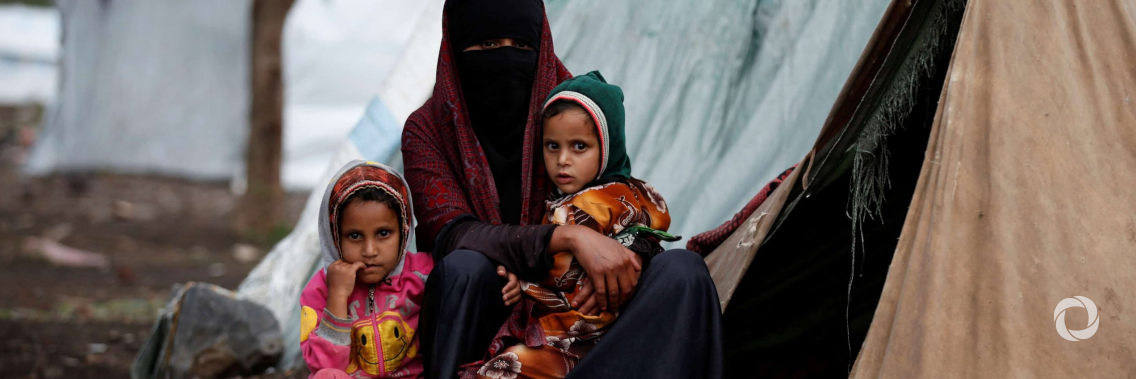
Yemenis are already living through the worst humanitarian crisis in the world. The health system is on the verge of collapse, with nearly half of all health facilities non-functioning or only partially functioning. Equipment and medical supplies are inadequate or obsolete, and health workers have gone without pay or received irregular pay for more than two years.
Yet even with the pandemic’s arrival in the country, funding for humanitarian work – including health care – is drying up.
At the start of 2020, UNFPA appealed for $100.5 million for its regular humanitarian operations in Yemen. To date, only 41 percent of that has been mobilized, leaving a gap of $58.8 million. An additional $24 million is needed for the COVID-19 response, including protecting health workers and shoring up access to reproductive health care.
“Our priority is to ensure that access to reproductive health care for these women is not disrupted and that they are protected from violence and abuse during these difficult times. We can, however, only do so if funding is available,” said Nestor Owomunhangi, UNFPA’s acting representative in Yemen.
Women and girls face serious threats to their reproductive health. Only 20 percent of the health system is providing maternal and child health services. An estimated 140 reproductive health facilities may be forced to close. Without funding, 90 percent of UNFPA’s reproductive health services could be closed by July. This could cut off as many as 320,000 pregnant women from the reproductive health care they need.
These shortfalls arrive just as UNFPA is trying to scale up its support to the country’s health system to address the pandemic. Women are expected to bear the brunt of a COVID-19 outbreak, should one occur.
In addition, the most basic preventative measure – handwashing – is not an option for many. More than 9.1 million women and girls need support to meet their basic water, sanitation and hygiene needs. Soaring prices and reduced purchasing power are also putting clean water and personal hygiene items out of reach for the most vulnerable.
UNFPA’s has already launched its COVID-19 response in the country, sending critical medical supplies, hygiene and sanitary items, and personal protective equipment for health-care workers. So far 114 health facilities have received equipment. Some 40 ventilators have been supplied, and another 40 are on the way. Funding to continue these efforts is urgently required.
Original source: UNFPA
Published on 08 May 2020