
Add us as your preferred source on Google to see more of our content in Search.
 Add to Preferred Sources
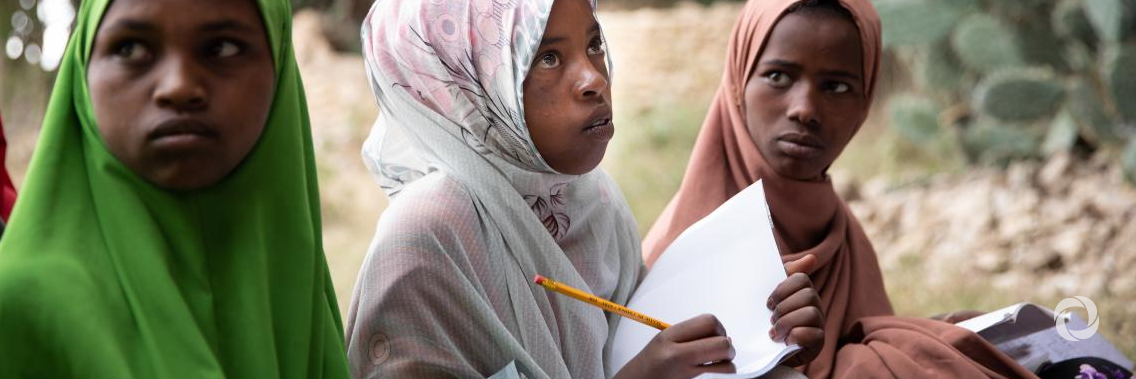
Going to school was already a daily challenge for many displaced children around the world. Now there are fears some may not return after COVID-19 lockdowns lift.
Even before the coronavirus pandemic shuttered schools around the world, disrupting the education of almost 1.6 billion students according to UNICEF, classrooms were closed to millions of displaced children.
Less than half of school-aged refugee children were enrolled while only one in four were attending secondary school. Months-long school closures risk reversing small gains recently made in expanding access to education for refugee children.
“There’s a big risk that inequalities in education will widen,” said Rebecca Telford, education chief for UNHCR, the UN Refugee Agency. She noted that while many countries have acted quickly to roll out distance learning programmes, there have been few targeted interventions to ensure they are accessible for refugees.
“The challenge is about access, and whether people have a phone, or other hardware at home,” she said. “Families might also not be able to afford data. Many refugee camp settings are in remote areas that aren’t reached by FM signals from national radio stations, so people can’t listen to educational broadcasts.”
Twenty-three percent of Syrian refugees in Jordan have no internet access at home and 46 percent surveyed in a recent needs assessment said their children were not accessing the government’s online learning platform.
While children from low-income families in host communities are similarly affected by the digital divide, refugee children – many of whom have previously had prolonged absences from school – are also missing out on much-needed additional assistance available through their schools such as language classes and psycho-social support.
Half a world away in Bangladesh, Rohingya refugee children living in sprawling settlements in Cox’s Bazar, had limited access to education even before a lockdown went into effect last month as a public health measure to limit the spread of COVID-19. Schools throughout the country have closed as well as learning centres in the camps.
Aid groups had been preparing to launch a pilot programme that would allow children in the settlements to start learning from the Myanmar curriculum for the first time, following the welcome approval of the Bangladesh government in January. In the meantime, hundreds of informal temporary learning centres were offering a basic education and a chance for children to forget the daily struggles they face in the overcrowded camps.
As well as developing and distributing printed learning materials, UNHCR is working with national governments and NGO partners to support teachers, parents and students while schools remain closed.
In countries where online learning is less available, such as South Sudan and Niger, the focus has been on distributing self-study packs and radios so refugee children can follow along with lessons broadcast by community radio stations.
Jennifer Roberts, a senior education officer with UNHCR, said that school closures have prompted some innovations in the delivery of educational support services and the use of digital technology that may prove invaluable as schools start preparing to safely re-open.
“Responding to the pandemic gives us the opportunity to build back better and improve the resilience of systems,” she said.
Lessons drawn from previous prolonged school closures, such as during the Ebola outbreak in West Africa, show that adolescent girls are most at risk of falling behind and not returning when schools re-open.
Original source: UNHCR
Published on 11 May 2020