
Add us as your preferred source on Google to see more of our content in Search.
 Add to Preferred Sources
With the COVID-19 pandemic threatening the safety and future of millions of refugees and migrants from Venezuela and their host communities, more than 150 organizations working across 17 countries in Latin America and the Caribbean are appealing to the international community for an urgent increase in support.
Since the outbreak of COVID-19, Venezuelan refugees and migrants are now faced with a myriad of challenges, including the loss of livelihoods, evictions as well as increasing stigmatization. Many are often unable to access basic health and hygiene facilities and to comply with physical distancing measures. Those living in an irregular situation and without documentation also risk being left out of national health and social welfare programmes.
“Coronavirus is pressuring our societies in ways we could have never imagined. For Venezuelan refugees and migrants, the pandemic exposes them to even greater hardship as many are now struggling to survive, away from home,” said Eduardo Stein, Joint UNHCR–IOM Special Representative for refugees and migrants from Venezuela.
Increasingly vulnerable, many are also at risk of exposure to gender-based violence, stigmatization, exploitation and abuse.
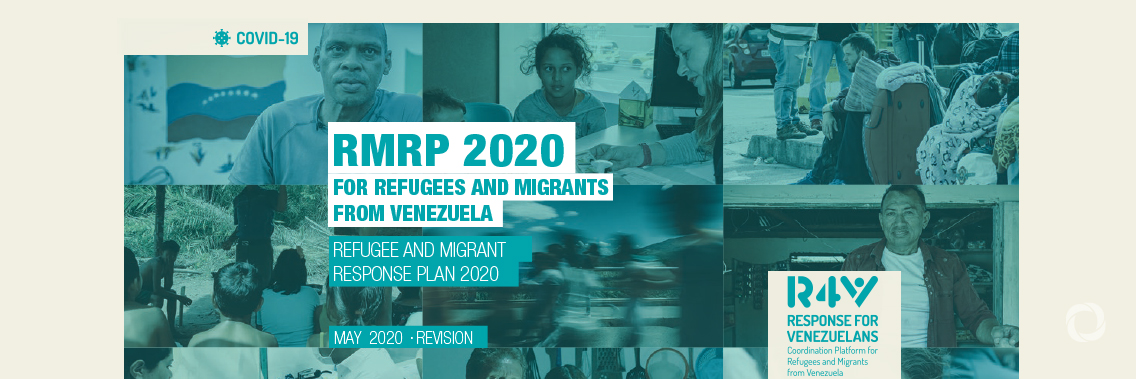
In response, humanitarian organizations revised the Regional Refugee and Migrant Response Plan (RMRP), launched in November 2019. This US$1.35 billion regional plan prioritized activities to address the most pressing protection, lifesaving and integration needs of refugees and migrants from Venezuela. The updated requirements of the RMRP now amount to US$1.41 billion, around one-third of which are for COVID-19-specific activities.
The main increases will support refugees and migrants in extremely precarious situations, especially those in urgent need of food, shelter and health services. It will also cover the provision of personal protective equipment and activities aimed at providing vital information on the pandemic and available services.
The Response Plan complements the tremendous efforts governments in the region have put in place to alleviate the needs of host communities. The inclusion of refugees and migrants in national responses and programmes – ranging from the delivery of basic goods and food packages, social welfare efforts, and the efforts aimed at halting evictions – has been and continues to be vital.
Given the quarantine measures in place across the region, the delivery of many activities in the Response Plan have been adjusted to provide assistance through remote modalities, including through enhanced cash-based assistance.
Other prioritized activities include the establishment of mobile health facilities for the testing and referral of COVID-19 cases and the upgrading of shelters with adequate physical spacing and improved sanitary conditions.
This is in addition to the provision of technical support to national authorities to complement their efforts in the COVID-19 response and the establishment of early warning systems and rapid response mechanisms to contain the spread of the pandemic among refugees and migrants. Crucially, refugees and migrants, irrespective of their status, need to be included in national health responses.
Original source: UNHCR
Published on 12 May 2020