

Add us as your preferred source on Google to see more of our content in Search.
 Add to Preferred Sources
Following Papua New Guinea’s first Extractive Industries Transparency Initiative Validation in 2018, the country is hopeful of achieving an improved score in its second validation this year.
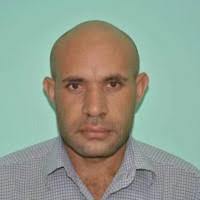
The head of the EITI coordinating body, the PNGEITI National Secretariat, Mr. Lucas Alkan, said a total of 14 areas of EITI implementation were identified and put forward by the EITI Board as areas where action was required to be taken by PNG (through PNGEITI-MSG) in preparation for the second validation which was initially scheduled for April 2020.
However, the second validation date has now been deferred to June and is likely to be deferred further due to the COVID-19 pandemic.
In terms of addressing the corrective actions recommended following the first validation, the PNGEITI-MSG has made good progress over the last two years in addressing most of these areas, particularly those that can be easily actioned whilst also taking appropriate steps to address those that require long-term solutions.
Hence, the PNGEITI National Secretariat is hopeful of an improved rating/score in the second validation, Mr Alkan said.
Papua New Guinea is not working alone in its efforts to improve its EITI reporting and finds the support offered by development aid from other countries to be encouraging.
Mr. Alkan said the Australian Government was one of the development partners helping PNG in its efforts to promote transparency and accountability in the mining and petroleum sector.
They were able to fund the Sub-national Reporting scoping study for PNGEITI National Secretariat and the Multi Stakeholder Group (MSG) in 2018. Discussions are ongoing for further support on the next phase of the project – the piloting of sub national reporting for selected resource provinces.
Due to the COVID-19 pandemic shutdown and restrictions, there is uncertainty as to when the next phase of the project would start,” he said.
He added “The PNGEITI National Secretariat has initiated discussions with the IMF, through their Regional Training Institute in Singapore (STI), regarding training opportunities for PNGEIT staff. Discussions were fruitful resulting one of our staff being invited to participate in the ‘Macroeconomic Management in Resource-Rich Countries’ training in Bangkok, Thailand in October last year.
Possible technical assistance from the IMF has also been mentioned. This will be explored in future, as and when the need arises.”
The PNGEITI National Secretariat met with a visiting team from the ADB office (Manila) earlier this year to discuss areas where possible ADB support could be provided. At this stage, there is no clear direction with regards to ADB support for EITI implementation in PNG. Further discussions and engagements were disrupted by the COVID-19 pandemic and lockdown. The National Secretariat hopes to pursue this discussion at some later point when matters have returned to normal.
Providing an update on PNG’s effort to anchor EITI implementation into PNG laws, Mr Alkan said an independent consultancy firm had been engaged by the PNGEITI-MSG to undertake the task of putting together the policy and legislative framework for the establishment of PNGEITI.
The National Policy on EITI was put forward and endorsed by the NEC in 2018 following a comprehensive consultation process, he said.
Following this, a draft bill on the Extractive Industries Transparency Commission (EITC) was put forward by the consultants as a way forward to legalise EITI operations in PNG. The draft bill is in its final stages before being taken to the NEC and Parliament for their consideration and subsequent endorsement. The MSG aims to finalize the bill for it to be presented in Parliament during the Budget Sitting later this year (November), Mr Alkan said.