
Add us as your preferred source on Google to see more of our content in Search.
 Add to Preferred Sources
A “massive” and combined effort by all countries is needed to tackle the COVID-19 pandemic, UN Secretary-General António Guterres said, as UN health agency head, Tedros Adhanom Ghebreyesus, insisted that “the majority of the world’s population remains susceptible to this virus”.
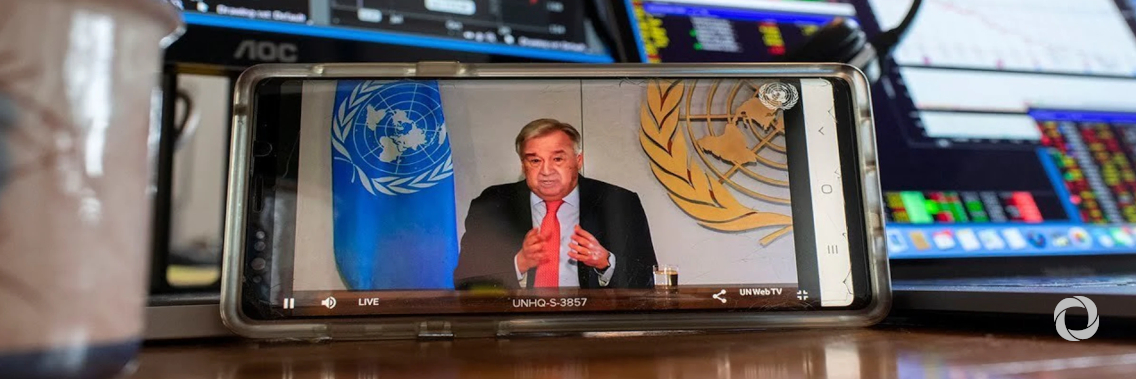
Addressing World Health Organization (WHO) Member States attending the foreshortened and virtual World Health Assembly in Geneva via videoconference, the UN chief pointed out that despite “some solidarity”, there had been “very little unity” in the global response to the new coronavirus so far.
#COVID19 has demonstrated our global fragility, not only in our health systems, but in all areas of our world and our institutions.
The pandemic must be a wake-up call.https://t.co/iwAez2xAaK #WHA73
— António Guterres (@antonioguterres) May 18, 2020
“Many countries have ignored the recommendations of the World Health Organization”, the UN chief said. “As a result, the virus has spread across the world and is now moving into the Global South, where its impact may be even more devastating, and we are risking further spikes and waves.”
Support was needed “that will keep households afloat and businesses solvent”, the UN Secretary-General insisted, reiterating his call for the G20 group of nations to consider launching a stimulus package equivalent to a double-digit percentage of global GDP.
He also called for greater support through the International Monetary Fund (IMF), the World Bank Group, and other international financial institutions.
The most affected individuals should receive help, Mr. Guterres explained, before singling out women, older people, children, and low-wage earners, among others.
While developed countries can do this by themselves, we must massively increase the resources available to the developing world.
After paying tribute to frontline health workers “who are the heroes of this pandemic”, Mr. Guterres also reiterated his support for the WHO, describing the organization as “irreplaceable” and one that needed more resources to support at-risk developing countries.
The 73rd session of the Assembly – which is the decision-making body of the World Health Organization (WHO) – is being held virtually over two days – instead of the usual two weeks, because of the COVID-19 pandemic.
Under the assembly’s cut-down agenda, country delegations are expected to deliver statements focusing specifically on the COVID-19 pandemic, with other business pushed back to later in the year.
Original source: UN News
Published on 18 May 2020