
Add us as your preferred source on Google to see more of our content in Search.
 Add to Preferred Sources
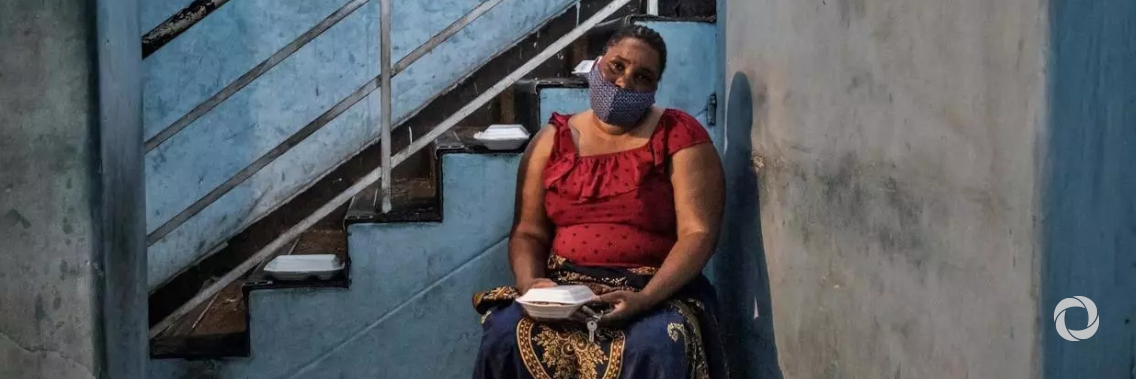
For much of Latin America, the hunger caused by the coronavirus pandemic is feared more than the disease itself.
“This is a region where one in three people faced food insecurity even before the first appearance of COVID-19 cases. A recent report by the Economic Commission for Latin America and the Caribbean predicts a 5% contraction in the economy and an increase in unemployment to more than 11% – making this the biggest crisis of the last century,” says Benedetta Lettera, Regional Manager for Action Against Hunger.
As movement restrictions and confinement measures impact on the daily diet of millions of people, they are increasingly difficult to sustain.
Peru has significant internal displacement: 165,000 people have requested humanitarian transfers in attempts to leave the capital and return to their hometowns due to job losses.
In Guatemala, where the state of disaster has been extended until June 4, there is concern about the limited testing capacity and a growing trend of returning migrants. Guatemala only has 13 doctors and nurses per 10,000 inhabitants, while in some areas, there is only one ICU for 400 people. The country is one of the least equipped health systems in Latin America. In addition, more than 70% of the working population faces extreme economic uncertainty as they lack work contracts or social safety nets and therefore depend on daily earnings for their livelihoods.
“Given how impossible it is for many to earn sufficient income, we can expect an increase in child malnutrition, which already affected half of the country’s children under age five before the pandemic,” said Miguel Ángel García, Regional Director for Central America.
Throughout Latin America, Action Against Hunger’s teams are distributing food, prevention supplies, and hygiene materials. They are also providing cash transfers and supporting the physical and mental health of those experiencing hunger caused by the pandemic.
In Peru, 44 tons of food have been distributed donated by the private sector and Peruvian institutions.
In Colombia, Action Against Hunger is distributing food and monitoring the nutrition status of children in border areas, while working to prevent disease through hygiene awareness and distribution of supplies in highly populated urban areas, such as the city of Bogotá.
In Guatemala and Nicaragua, Action Against Hunger is distributing food and hygiene kits, as well as disinfecting health facilities and training staff in infection prevention and control measures.
Original source: Action Against Hunger
Published on 22 May 2020