
Add us as your preferred source on Google to see more of our content in Search.
 Add to Preferred Sources
UN Secretary-General António Guterres released to the Security Council his latest report on the protection of civilians in armed conflict.
The report is being published against the backdrop of the COVID-19 pandemic, which has had a severe impact on the protection of civilians, in particular in armed conflict settings, and has further exacerbated the vulnerability of the least protected in society.
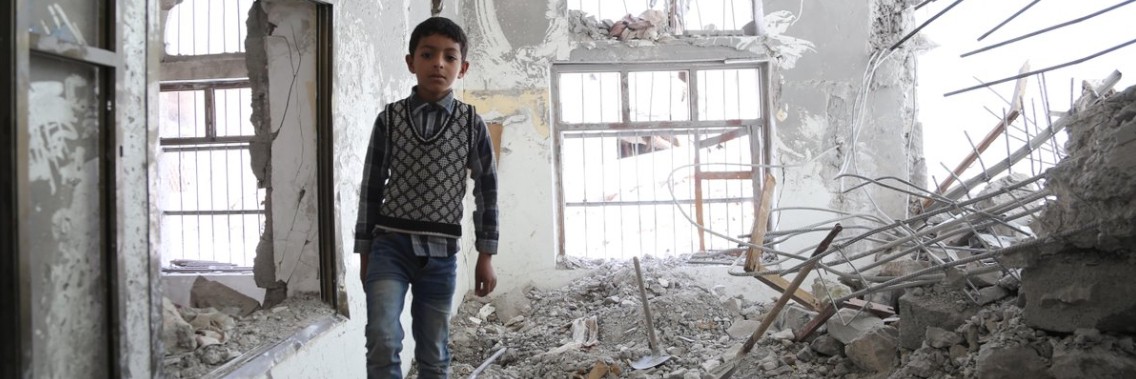
The Secretary-General reported that tens of thousands of civilians were killed, injured or traumatized in 2019. Millions of people were forced from their homes or displaced for a second, third, or fourth time, their vulnerability increasing in the process.
Consistent with the findings in previous years, women and girls, in particular, were subject to appalling sexual and gender-based violence. In addition, direct or indiscriminate attacks by parties to conflict damaged and destroyed homes, schools, hospitals, markets, places of worship, and essential civilian infrastructure.
More than 20,000 civilians were killed or injured in 2019 as a result of attacks in conflicts in 10 countries: Afghanistan, Central African Republic, Iraq, Libya, Nigeria, Somalia, South Sudan, Syria, Ukraine and Yemen. Afghanistan accounted for the largest number of recorded civilian casualties, with 10,392 civilians killed or injured.
According to the findings of the report, conflicts continued to have a devastating impact on children throughout 2019. Tens of thousands of boys and girls were forced to take part in hostilities and were exposed to a multitude of other violations, including killing, maiming and sexual violence. A disproportionate number of children were also displaced.
Violence against humanitarian workers and assets was widely reported in 2019.
The Secretary-General noted that conflict remains the main driver of global hunger. According to the 2020 edition of the Global Report on Food Crises, 77 million of those people who faced acute hunger in 2019 – more than 57 percent of the total globally – were living in 22 countries and territories affected by conflict or insecurity.
The Secretary-General concluded that the most effective way to protect civilians is to prevent the outbreak, escalation, continuation, and recurrence of armed conflict. He reiterated the need to silence the guns, as the world confronts the monumental challenge of the COVID-19 pandemic. Where conflicts cannot be prevented or resolved, it is imperative that collectively, parties to conflict, Member States, the UN, and civil society strengthen the protection of civilians.
Original source: UNOCHA
Published on 27 May 2020