

Add us as your preferred source on Google to see more of our content in Search.
 Add to Preferred Sources
COVID-19 has sent significant shockwaves across global trade and supply chains and has revealed a number of vulnerabilities that economic integration brings. In the long-run, the effects of the current pandemic could bring systemic changes for the world trading system. This article presents six possible effects the pandemic could have on world trade.
- Global trade will contract in 2020 following COVID-19 with uncertain recovery in 2021.
Global trade was already slowing in 2019, notably following the trading and tariff tensions between the major global players, US and China. This contributed to a 0.1% decrease in volume terms in global goods trading last year.
The World Trade Organization (WTO) anticipates a further fall of 13% to 32% in 2020. Depending on the duration of the outbreak and the effectiveness of the policies to combat the virus and its effects, the WTO does foresee a recovery in 2021. However, nearly every region will suffer a decline in trade volumes in 2020 with exports from North America and Asia being hit the hardest. The least affected countries are located in Africa, the Middle East and the Commonwealth of Independent States (CIS) whose relatively small estimated decline in exports is due to the fact that countries from these regions rely heavily on exports of energy products, demand for which is relatively unaffected by fluctuating prices.
Trade is likely to fall more steeply in sectors with complex value chains, particularly electronics and automotive products. The services industry may be most directly affected by COVID-19 as a result of transport and travel restrictions.

Source: https://www.wto.org/english/news_e/pres20_e/pr855_e.htm
- There will be an increase in the domestic production of essential goods, such as the production of medical products.
The pandemic has exposed countries’ vulnerabilities to outsourcing the production of essential goods. Governments in European countries and the US have found themselves exposed because of the lack of domestic manufacturing capacity to produce critical medical equipment such as ventilators.
China has been exporting pharmaceutical products to the US since the 1990s, becoming the United States’ second-largest supplier of medical goods. China is also France’s main supplier of raw material for medical drugs with 80% of material being produced in China.
US President Donald Trump has emphasized the importance of domestic vital supply chains, particularly in the area of pharmaceuticals, stating that “We cannot outsource our independence, we cannot be reliant on foreign nations.” While Bruno Le Maire, the French Minister of the Economy and Finance, has stated that the outbreak reveals an “irresponsible and unreasonable” reliance on Chinese suppliers of medical goods and that the pandemic is a “game-changer” for globalization.
DEPENDENCE ON CHINA NEEDS TO CHANGE: @BrunoLeMaire, Finance Minister of France, didn’t mince words when he sat down with me at the G20 gathering in Riyadh. Here’s an important part of the conversation. #G20SaudiArabia #coronavirus #trade @business @BloombergTV pic.twitter.com/C5z60MhsBy
— Yousef Gamal El-Din (@youseftv) February 24, 2020
- The trade system is witnessing a temporary rise in trade costs as well as a potentially long-term increase.
The current pandemic has raised the international trade costs of imports and exports across all goods and services. The increase in transport and transactions is driven by additional inspections, reduced hours of operation, road closures, border closures and increases in transport costs. In the long-term, trade tariffs could increase on the grounds that this could potentially help to shore up domestic manufacturing capabilities in certain sectors and industries that are important for a country and also retain jobs rather than employees being sought from abroad for cheaper labor cost.
- Production chains could witness diversification to reduce dependency on a single country or supplier.
The pandemic is currently forcing countries and businesses to reassess their exposure to global supply chain disruption and specifically their dependency on single foreign suppliers. For example, China has increasingly become the main supplier of intermediate inputs for manufacturing companies abroad. Currently, approximately 20% of global trade in manufacturing intermediate products comes from China. Therefore, any significant disruption to the supply from China in this sector can substantially affect businesses in the rest of the world. It is expected that businesses and countries will seek to diversify the sources of inputs in order to reduce their dependence on supply from a single country.
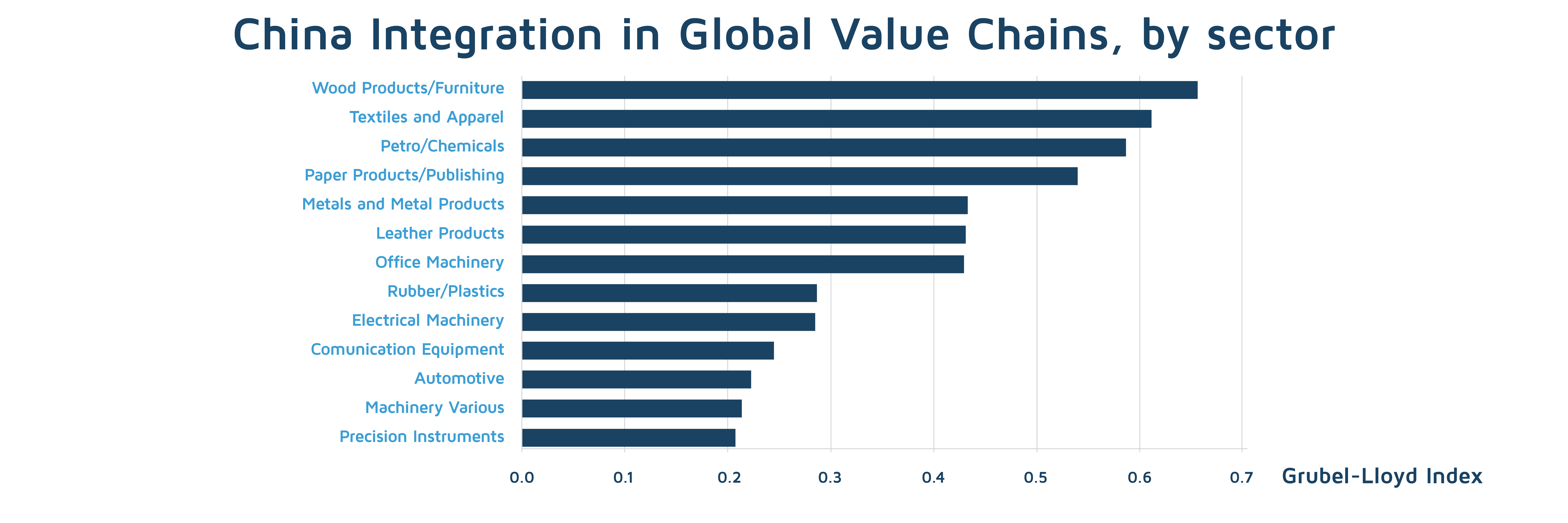
Source: https://unctad.org/en/PublicationsLibrary/ditcinf2020d1.pdf?user=1653
- Global trade could witness the shortening of production chains from global to regional and local chains.
Longer supply chains have saved businesses money but bring increased risks if a critical link were to break. Supply chains were already becoming shorter and more regional before COVID-19, mainly to reduce transport and logistics costs, a trend which may accelerate as companies move their focus on resilience. Regional supply chains would prompt more regional integration “with US companies moving production to Mexico and European businesses ones to Eastern Europe or Turkey”. Local production and supply chains would occur if national governments adopted protectionist policies and forced companies to relocate production facilities closer to home to avoid a reliance on foreign suppliers.
- COVID-19 could bring more emphasis on economic sovereignty and protectionism.
Signs of protectionism arose early on during the pandemic with countries restricting the export of essential medical items and food. As of the end of March, 54 governments had introduced export restrictions on medical supplies. In Europe, the coronavirus outbreak is already reinforcing the EU’s quest for strategic autonomy and economic sovereignty, as the pandemic exposed its dependency on third countries – particularly in sectors vital to public health and security. European Commission President von der Leyen commented that “as in any crisis, when our industrial and corporate assets can be under stress, we need to protect our security and economic sovereignty.” Meanwhile, the White House administration has been considering a “Buy American” executive order for pharmaceuticals which could require the federal government to purchase American-made products where it can.
The DevelopmentAid platform currently has over 300 open and forecast tenders related to the trading sector. To review the offers, visit the DevelopmentAid website.