
Add us as your preferred source on Google to see more of our content in Search.
 Add to Preferred Sources
The AIDS response has taught the world the importance of protecting human rights and promoting gender equality when fighting a disease. COVID-19 has amplified that lesson.
Since the start of the COVID-19 pandemic, UNAIDS has repeated the call that governments must protect human rights and prevent and address gender-based violence—an issue that is even more vital now that lockdowns are putting women and girls at an even higher risk of intimate partner and sexual violence. Equally, UNAIDS has made it clear that sexual and reproductive health services should be recognized as the essential services they are.
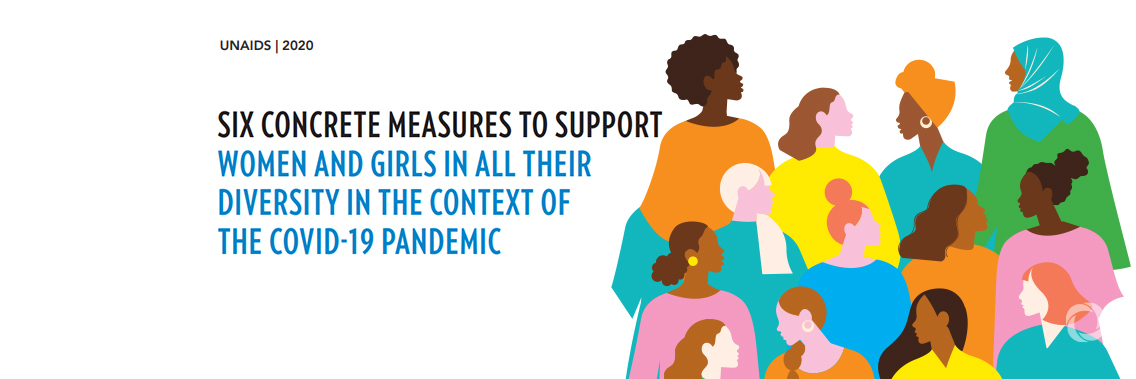
To drive those messages to decision-making tables and to the front lines of the response, a new UNAIDS report shows how governments can confront the gendered and discriminatory impacts of COVID-19. Presenting six areas as imperatives to address the needs, and protect the rights, of women and girls during the pandemic, the report highlights the needs of women and girls in all their diversity, particularly the most marginalized, and the importance of access to essential health services. The neglected epidemic of gender-based violence, the misuse of criminal and punitive laws, the importance of education, health and well-being and the value of women’s work and making unpaid care work everybody’s work are also showcased.
“Just as HIV has held up a mirror to inequalities and injustices, the COVID-19 pandemic has put a spotlight on the discrimination that women and girls battle against every day of their lives,” said Winnie Byanyima, Executive Director of UNAIDS. “Many of the drivers of inequality in the HIV epidemic are the same as those driving inequality and injustice in the COVID-19 pandemic—both epidemics can only be successfully fought by putting gender equality at the centre of the response.”
The report underscores that sexual and reproductive health and rights are often the first to be sacrificed during epidemics and that the gains of the past decade must be protected. The report also makes it clear that scarce resources must be focused on the most marginalized women and girls, including sex workers, gender diverse people, women in prison and migrants and others without proof of employment or residence.
A selection of practical steps that UNAIDS has been taking with partners in countries to maintain essential health-care services, mobilize emergency legal protection and support populations facing human rights violations during the COVID-19 outbreak are presented.
Above all, the report has the message that health, safety, dignity and rights, especially for women and girls, in all their diversity, must not be compromised and women should lead the call for change.
Read the report: Six concrete measures to support women and girls in all their diversity in the context of the COVID-19 pandemic.
Original source: UNAIDS
Published on 15 June 2020