
Add us as your preferred source on Google to see more of our content in Search.
 Add to Preferred Sources
While the world continues to grapple with the devastating consequences of COVID-19, WWF is calling for urgent global action to address the key drivers it has identified which will cause future zoonotic disease outbreaks.
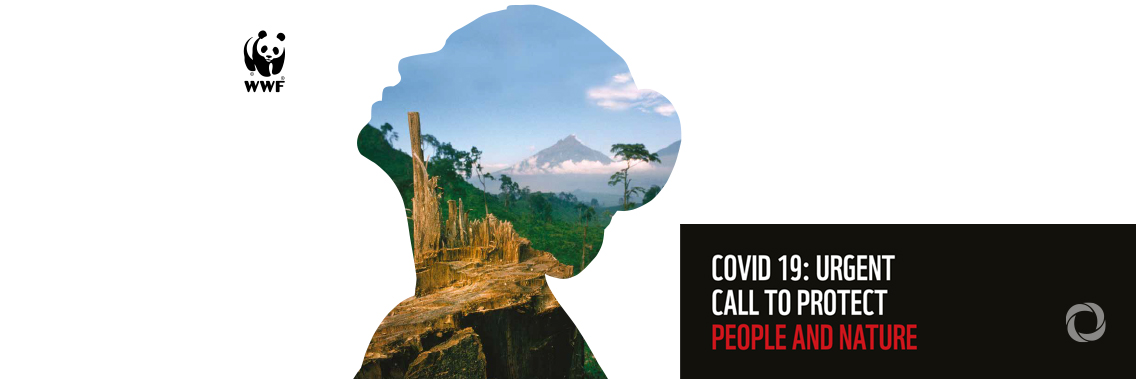
In a new report ‘COVID 19: urgent call to protect people and nature’, WWF says that the environmental factors driving the emergence of zoonotic diseases are: the trade and consumption of high-risk wildlife, land-use change leading to deforestation and conversion, expansion of agriculture and unsustainable intensification and animal production. Numerous warnings from scientists and thought leaders have been made about the risk of a global pandemic. WEF ranked pandemics and infectious diseases as one of the top global risks over a decade ago, posing ‘an acute threat to human life’.
Marco Lambertini, Director General of WWF International said: “We must urgently recognize the links between the destruction of nature and human health, or we will soon see the next pandemic. We must curb the high-risk trade and consumption of wildlife, halt deforestation and land conversion as well as manage food production sustainably. All these actions will help prevent the spillover of pathogens to humans, and also address other global risks to our society like biodiversity loss and climate change. There is no debate, and the science is clear; we must work with nature, not against it. Unsustainable exploitation of nature has become an enormous risk to us all. ”
Questions remain about the exact origins of COVID-19, but all available evidence suggests that it is a zoonotic disease, meaning it jumped from wildlife to humans. The government of China announced a comprehensive ban on the consumption of wild animals on 24 February. Other governments must also follow suit and close their high-risk wildlife markets and end this trade once and for all.
However, addressing high-risk wildlife trade and consumption in isolation will not be enough to prevent the next pandemic – our unsustainable global food system is driving the large-scale conversion of natural spaces for agriculture, fragmenting natural ecosystems, and increasing interactions between wildlife, livestock, and humans.
A current tragedy is unfolding in Brazil with a surge in deforestation accelerating due to cuts in enforcement by the federal government, and this was after a 64 percent increase in deforestation had already been seen in April compared to last year.
The COVID-19 crisis demonstrates that systemic changes must be made to address the environmental drivers of pandemics.
Read the report: COVID-19: urgent call to protect people and nature.
Original source: WWF
Published on 17 June 2020