
Add us as your preferred source on Google to see more of our content in Search.
 Add to Preferred Sources
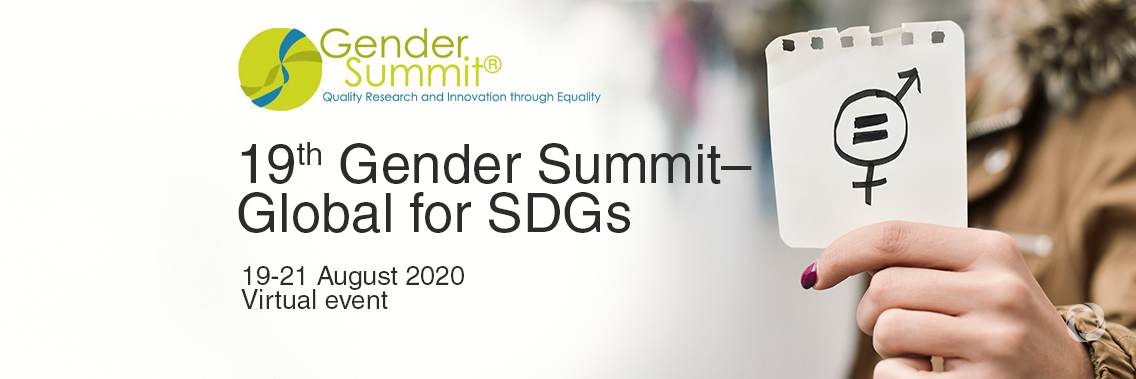
?19-21 August 2020
Virtual event
The primary goal of GS19 is to bring together key player organisations that are actively advancing knowledge and practice for effective implementation of SDG targets, and identify topics where gender is not given the priority it should.
Example organisations that are being targeted include: research performing members of the UN Sustainable Solutions Network (SDSN); members of the International Science Council (ISC); multilateral institutions such as OECD and UNESCO; funders of research for development such as the International Development Research Centre in Canada; and capacity building programmes such as the collaborative GREAT (Gender-responsive Researchers Equipped for Agricultural Transformation) project involving Cornell (USA) and Makerere (Uganda) universities.
The target participants are acknowledged technical and gender experts and practitioners from across the different global regional familiar with SDG-related themes as well as with gender knowledge and experience relevant to different SDG targets.
The format of GS19 will follow the standard applied to all Gender Summit events, namely promoting evidence- and consensus-based dialogue between scientists, gender scholars, and policymakers, as well as stakeholders in science endeavours, innovation and development, leading to concrete recommendations for making improvements, and who should take action.
The programme of GS19 will be made up of a collection of sessions, each dedicated to a cluster of SDGs that offer the best opportunities for advancing impactful research, with panels of speakers representing the different sectors: research, innovation, development, policy, publishing and communiucation.
The task of each session will be to offer an expert review and assessment of how gender issues have been addressed in individual and clusters of SDGs during the first five years of the implementation activities. The outputs will include advice showing where good progress has been made and where it has been lacking; where important still gaps in knowledge act as barriers to effective implementation; and where sufficient gender knowledge is available and can be applied to develop better and more sustainable interventions to enhance impact.
Original source: Gender Summit
Published on 22 June 2020