
Add us as your preferred source on Google to see more of our content in Search.
 Add to Preferred Sources
The novel coronavirus COVID-19 is having a profound impact on global trade and the businesses that drive it. With countries in various stages of lockdown or loosening confinement periods, it is becoming clear that the virus has particularly impacted small and medium-sized enterprises (SMEs).
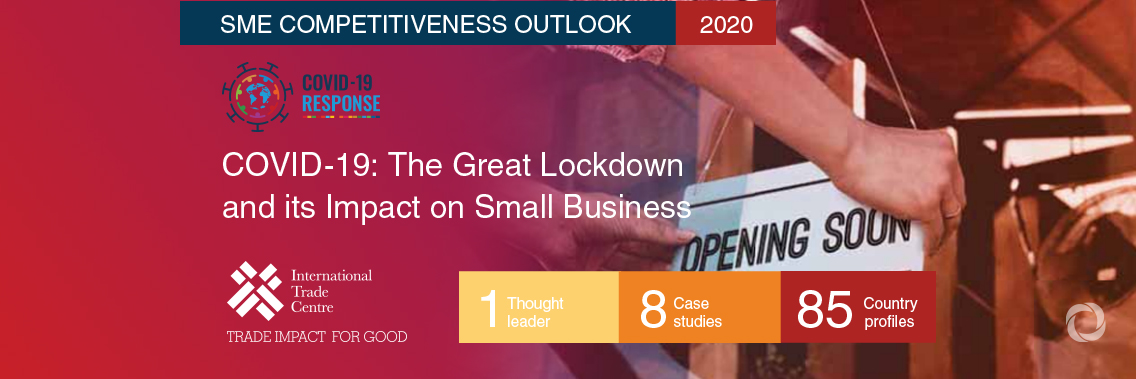
The 2020 edition of the International Trade Centre’s 2020 SME Competitiveness Outlook reveals just how profoundly SMEs and global supply chains have been tested by the COVID-19 pandemic and left international trade in turmoil.
ITC acting Executive Director Dorothy Tembo said: “The COVID-19 pandemic has been both a health and an economic crisis and has presented a number of challenges for SMEs and global supply chains. ITC’s 2020 SME Competitive Outlook report analyses the impact of COVID-19 on SMEs, international supply chains and trade while highlighting actions to build the resilience of SMEs given that they will continue to be lightning rods for future growth and to meet the Sustainable Global Goals.”
The report provides a guide for businesses, policymakers, and business support organizations on how to deploy post-pandemic recovery strategies. It aims to help SME ecosystems weather the crisis and gear up for the new normal, emphasizing the need for resilient, sustainable and inclusive trade and leadership.
While most countries experienced some form of shutdown, the findings in the SME Competitiveness Outlook highlight that it was lockdowns in China, the European Union and the United States that have had the greatest impact on trade. Together these three economies account for 63% of world supply-chain imports and 64% of supply-chain exports. The report estimates that the global disruption of these manufacturing hubs will amount to $126 billion in 2020.
This disruption is also having a negative knock-on effect on developing countries. The SME Competitiveness Outlook predicts that African exporters are set to lose more than $2.4 billion in global industrial supply-chain exports as a result of factory shutdowns in China, the EU and the US. The bulk of this loss – more than 70% – is caused by the temporary disruption of the supply-chain linkages with the EU.
Drawing on data collected by ITC’s COVID-19 Business Impact Survey, carried out in the first months of the pandemic, the SME Competitiveness Outlook finds that more than 55% of all businesses have been strongly affected by the pandemic.
Two-thirds of micro and small firms said that crisis had strongly affected their business operations, compared with 40% of larger companies. One-fifth of SMEs said that they were at risk of shutting down permanently within three month.
Companies in the services sector are the firms hardest hit by COVID-19, especially those providing accommodation and food services. A full 76% of surveyed firms providing such services said that full or partial lockdowns had strongly affected their business operations.
At the same time, the report finds that export bans and other restrictions cover 73% of worldwide trade in COVID-19-related products. A total of 93 countries apply temporary export measures related to the virus, including export bans or restrictions on medical products, but also food. Such export restrictions vary by region. Few African countries, for example, have export restrictions in place on COVID-19-related medical equipment, which is down to that they do not manufacture these products themselves.
As well as providing an overview of responses taken by governments and businesses to overcome the crisis, the 2020 SME Competitiveness Outlook provides suggestions for companies, business support institutions and policymakers on how to adapt to a ‘new normal’ in the coming period.
The report highlights four priority themes: the need to strengthen the resilience of SMEs to withstand future shocks; the need to step up efforts to help SMEs go digital; making supply chains more open and inclusive; and using the crisis to ensure that business across the world become more sustainable and climate-friendly.
Read the International Trade Centre’s 2020 SME Competitiveness Outlook.
Original source: ITC
Published on 22 June 2020