
Add us as your preferred source on Google to see more of our content in Search.
 Add to Preferred Sources
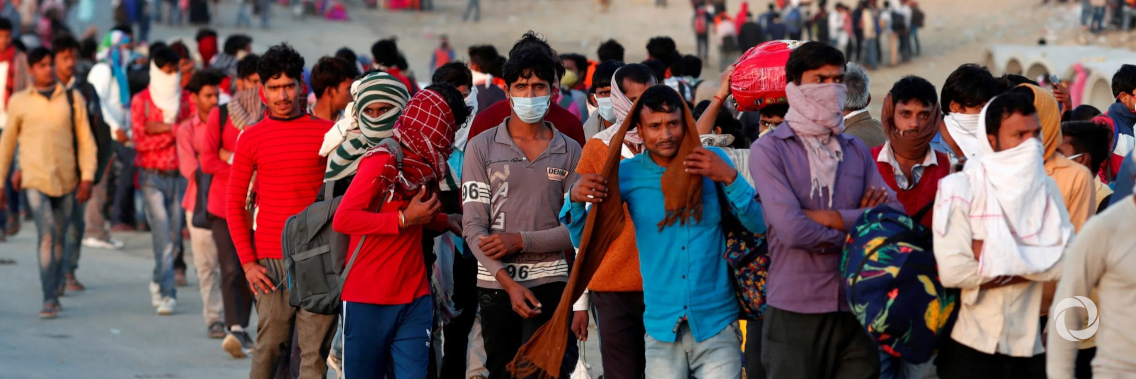
Tens of millions of migrant workers, forced to return home because of the COVID-19 pandemic after losing their jobs, face unemployment and poverty in their home countries, the International Labour Organization has warned.
As containment measures ease, millions of migrant workers may be required to return home to low and middle-income countries where labour markets, which were fragile before the COVID-19 outbreak, are now further weakened by the additional strain of high levels of unemployment and serious business disruptions due to the pandemic. In addition, their families will suffer financially from the loss of the remittances normally sent to them.
Meanwhile, other migrant workers have found themselves stranded in host countries without access to social protection and little money for food or accommodation. Even those with jobs may be taking reduced wages and living in cramped worksite residences where social distancing is impossible, putting them at greater risk of contracting the virus.
While many migrant workers, particularly women, are doing essential jobs for their host societies during the pandemic, particularly in the care or agriculture sectors, those in other sectors have lost their jobs or have continued to work informally.
“This is a potential crisis within a crisis,” said Manuela Tomei, Director of the ILO’s Conditions of Work and Equality Department. “We know that many millions of migrant workers, who were under lockdown in their countries of work, have lost their jobs and are now expected to return home to countries that are already grappling with weak economies and rising unemployment. Cooperation and planning are key to avert a worse crisis.”
It is estimated there are 164 million migrant workers worldwide, nearly half of them women, comprising 4.7 percent of the global labour force. While not all of these workers will return home – after losing their jobs or for other reasons – informal ILO research in more than 20 countries indicates that many millions are expected to do so.
Most of their home countries have very limited scope to reintegrate such large numbers, and often do not have policies and systems in place to ensure effective labour migration governance and smooth reintegration plans, including for skills development and recognition. Governments in Asia and Africa, in particular, expect millions of migrant workers to return, whether through compulsion or voluntarily, as their job prospects evaporate.
The ILO publications include assessments of the impact of COVID-19 on migrant workers in Jordan, Lebanon and the ASEAN region, on seasonal workers’ schemes, and on refugee workers and other displaced persons. There is also guidance on policy responses to help maximize the benefits of the returning wave of migrants, including procedures for recognizing skills acquired, ensuring fair recruitment, extending social protection coverage, and help with finding new jobs or re-migrating safely.
Original source: ILO
Published on 24 June 2020