
UNHCR appeals for resettlement places as record forced displacement and protection needs outstrip solutions
Add us as your preferred source on Google to see more of our content in Search.
 Add to Preferred Sources
Over 1.4 million refugees currently residing in 62 host countries will be in need of resettlement next year according to the latest estimates released by UNHCR, the UN Refugee Agency.
“With one percent of humanity now displaced and the overwhelming majority hosted in developing regions facing their own challenges, protection needs are rising but there is a huge deficit in terms of solutions. We need countries to do more and help us find safe homes for those whose lives depend on it,” said UN High Commissioner for Refugees Filippo Grandi.
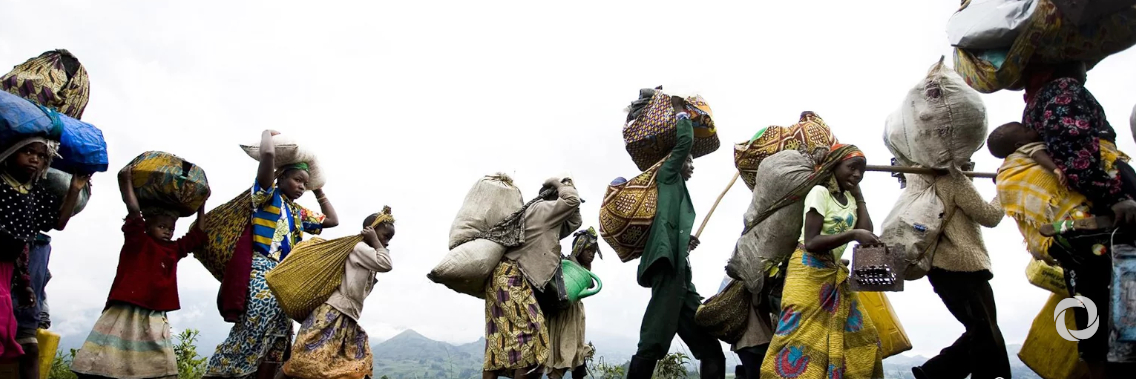
According to the Projected Global Resettlement Needs 2021 report, refugees most at risk and in need of resettlement include Syrian refugees. For the fifth year in a row Syrians represent the population with the highest resettlement needs (41 percent), followed by South Sudanese (9 percent) and Congolese refugees (9 percent).
“Despite the COVID-19 pandemic, conflict and persecution have not stopped and people around the world continue to flee their homes in search of safety. Resettlement can never be a solution for all of the world’s refugees but for the few that are most at risk it can mean the difference between life and death,” said Grandi.
Resettlement, which involves the relocation of refugees from a country of asylum to a country that has agreed to admit them and grant them permanent settlement, helps ensure the protection of those whose lives may be in danger or who have specific needs that cannot be addressed in the country where they have sought protection.
Developing countries host 85 percent of the world’s refugees. By region of asylum, the East and Horn of Africa region continue to account for the highest resettlement needs. This is followed by Turkey, which is host to 3.6 million refugees, the Middle East and North Africa, and Central Africa and the Great Lakes region.
To share responsibility and show solidarity with states supporting large refugee populations, increasing opportunities for refugees to move to third countries through resettlement and complementary pathways for admission, including family, work and study routes, is one of the key objectives of the Global Compact on Refugees.
Last year, UNHCR and partners launched a Three-Year Strategy on Resettlement and Complementary Pathways which foresees the resettlement of one million refugees and the admission of two million refugees through complementary pathways by 2028. To realize this goal, more countries are needed to join the resettlement program and offer places for refugees.
In 2019, 26 countries admitted 107,800 refugees for resettlement of which nearly 64,000 were with UNHCR’s assistance. This year only 57,600 resettlement places have been made available by states to UNHCR. Unfortunately, COVID-19 will impact the full realization of these resettlement spaces.
Original source: UNHCR
Published on 24 June 2020