
Add us as your preferred source on Google to see more of our content in Search.
 Add to Preferred Sources
The World Health Organization said that it will carefully review a study documenting the risk of a new strain of H1N1 swine flu that has emerged in China, warning that health officials “cannot let our guard down,” according to Reuters.
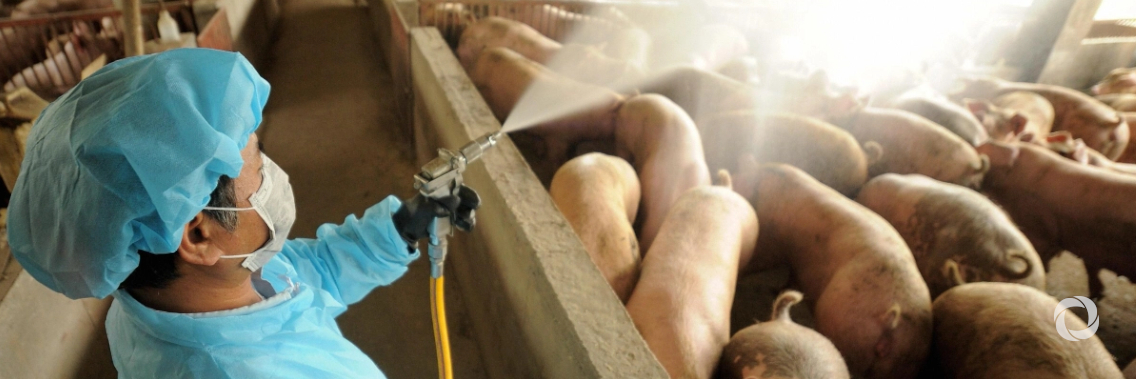
The study, published in the journal Proceedings of the National Academy of Sciences, took 338 blood samples of workers on pig farms and people in nearby areas in China over the past three years. They found that 10.4% of workers, and 4.4% of neighboring residents, had antibodies for the virus, called “G4 EA H1N1.”
Although the virus has not been known to make anyone sick yet, it could rapidly transform as it mutates within humans and pigs. The study urges health officials to monitor whether humans have begun passing the virus to each other, which could indicate the virus becoming more dangerous. The authors ultimately warn that the virus should be closely monitored and contained.
Christian Lindmeier, a WHO spokesperson, said the global health organization is taking the virus seriously.
“We will read carefully the paper to understand what is new,” Lindmeier told reporters in Geneva. “It also highlights we cannot let our guard down on influenza and need to be vigilant and continue surveillance even in the coronavirus pandemic.”
He added that experts must keep tabs on affected animal populations so the virus can be traced.
News of the H1N1 virus comes as countries are grappling with the COVID-19 pandemic, which has infected more than 10 million people globally and killed more than 510,000.
While it’s unclear if this new virus will pose a threat to humans, epidemiologists and health officials agree that it should be monitored and contained, according to the New York Times. The last major swine flu that caused catastrophic harm occurred in 2009, killing an estimated 285,000 people, the Times noted.
Original source: Global Citizen
Published on 01 July 2020