
Add us as your preferred source on Google to see more of our content in Search.
 Add to Preferred Sources
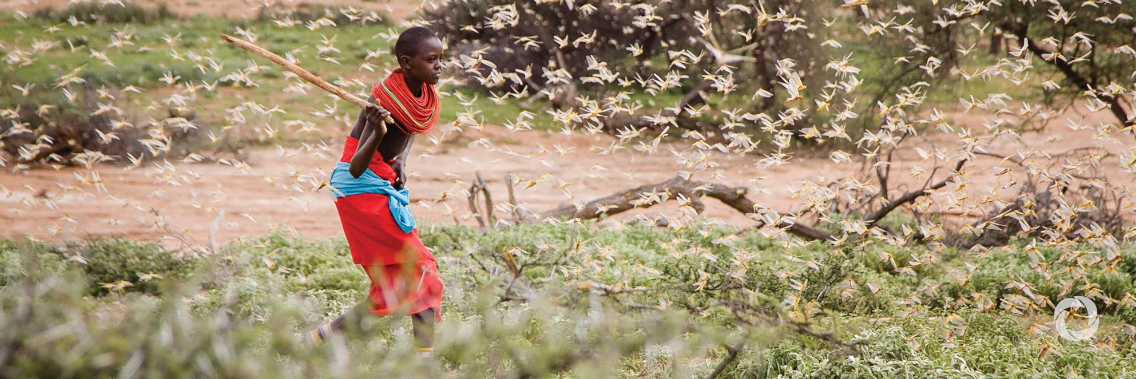
The EU has mobilised a further €15 million to support the United Nations and partner countries in the fight against one of the worst desert locust outbreaks seen in East Africa in decades.
The desert locust outbreak has had a devastating impact on food security in an already vulnerable region. Efforts to halt the spread of the locust infestation have been further strained due to the coronavirus pandemic. This is why the EU is increasing its support to the United Nation’s Food and Agriculture Organisation’s (FAO) response plan and will support broader EU development cooperation and humanitarian assistance in the region.
Commissioner for International Partnerships, Jutta Urpilainen, said: “Our friends and partners in the Horn of Africa have experienced the catastrophic consequences of this desert locust outbreak on livelihoods and food security, a situation that is aggravated by the coronavirus pandemic which has made intervention efforts more difficult. Earlier this year we demonstrated the need to react quickly to combat the outbreak. Today’s decision to increase our support shows we are determined to continue our action to tackle food insecurity as a founding member of the Global Network Against Food Crises.”
The FAO has formulated a response plan, but given the continued desert locust crisis, country interventions must be scaled up to support national governments of the affected countries. The EU, together with partners in the region, is committed to containing this outbreak, anticipating its impacts on food and nutrition security and protecting the livelihoods of millions of vulnerable people across Eastern Africa and beyond.
The EU’s €15 million contribution announced comes in addition to €42 million mobilised in early 2020 for a broad humanitarian-development approach in the region.
Original source: European Commission
Published on 08 July 2020