
Add us as your preferred source on Google to see more of our content in Search.
 Add to Preferred Sources
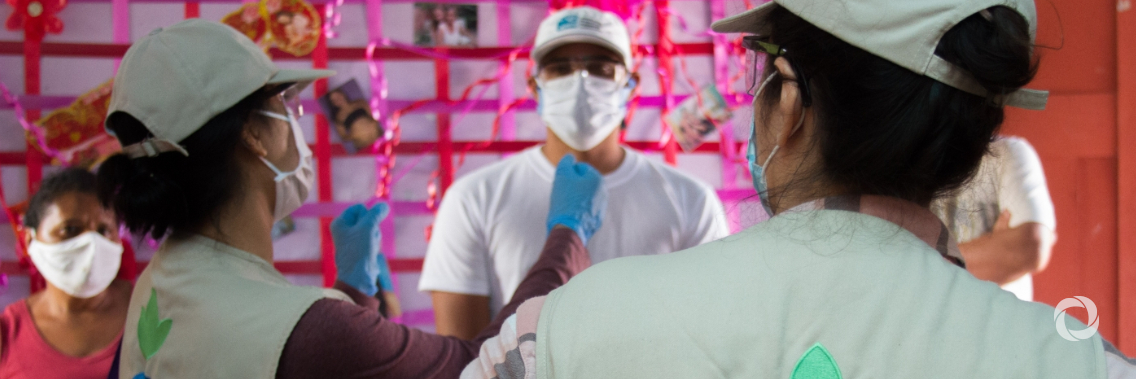
Latin America is facing an unprecedented hunger crisis as a result of the pandemic, according to Benedetta Lettera, Desk Manager for Action Against Hunger in Latin America.
“It is a perfect storm, with a major health crisis, accompanied by a socio-economic crisis, with a grassroots situation that was complex even before the pandemic,” said Lettera.
As the economy contracts and unemployment increases, an additional 29 million people in the region could be driven into poverty, according to estimates by the Economic Commission for Latin America and the Caribbean (ECLAC).
After years of increasing progress towards the eradication of hunger, in 2019, Latin America recorded the greatest overall increase in the prevalence of food insecurity. Estimates indicate that if no preventative measures are taken, by 2030, there could be 67 million people suffering from hunger due to the impact of the pandemic and other regional crises, such as drought in Central America, according to the latest United Nations report.
“In Peru – the country with the fifth-highest number of confirmed cases – thousands of families go days without food, travel miles looking for food and have returned to self-managing ‘community pots’ [of food] between neighborhoods, which had not been organized since the 1990s when the country was suffering a serious economic crisis,” says Amrica Arias, Country Director for Action Against Hunger in Peru.
Before the pandemic, 20% of the Peruvian population lived in poverty and survived through informal employment. With quarantine measures and no possibility of work, these already vulnerable people have found themselves in extremely difficult conditions.
In Colombia, COVID-19 has deepened the country’s structural problems and exacerbated the needs of the most vulnerable people.
“There is significant concern about hidden poverty, which affects the middle classes who could soon fall into poverty, and about health systems, which are under enormous pressure to respond to the health crisis. This is especially serious in rural and isolated areas,” says Pilar Medina, Deputy Director for Action Against Hunger in Colombia, who also warns of food insecurity experienced by children.
Across Central America, hopelessness grows each day. COVID-19 cases are increasing, and the consequences are hitting the most vulnerable populations hard.
“The pandemic has caused an increase in the number of acutely malnourished children, paralyzed exports, and increased the number of informal workers, who now make up 70% of the country’s workforce,” said Miguel Angel Garcia, Regional Director of Central America for Action Against Hunger.
Original source: Action Against Hunger
Published on 17 July 2020