
Add us as your preferred source on Google to see more of our content in Search.
 Add to Preferred Sources
Nearly six years have passed, but the conflict in Yemen continues to rage on. So far in 2020, more than 100,000 people have been forced to flee – mostly due to fighting and insecurity. However, COVID-19 is beginning to emerge as a new cause of internal displacement across the country.
From 30 March to 18 July, the International Organization for Migration’s (IOM) Displacement Tracking Matrix (DTM) recorded over 10,000 people moving due to COVID-19, most typically related to fears of contracting the virus and the impact of the outbreak on services and the worsening economic crisis.
“The situation in Yemen is so dire, particularly in locations like Aden where hospitals are turning away suspected cases and news reports have tragically shown large numbers of graves being dug, that families are now leaving virus hotspots,” said IOM Yemen’s Chief of Mission, Christa Rottensteiner.
“Displaced communities in Yemen have been the ones worst affected by the conflict. Now we are seeing that the COVID-19 outbreak is having a huge negative impact on them,” she added.
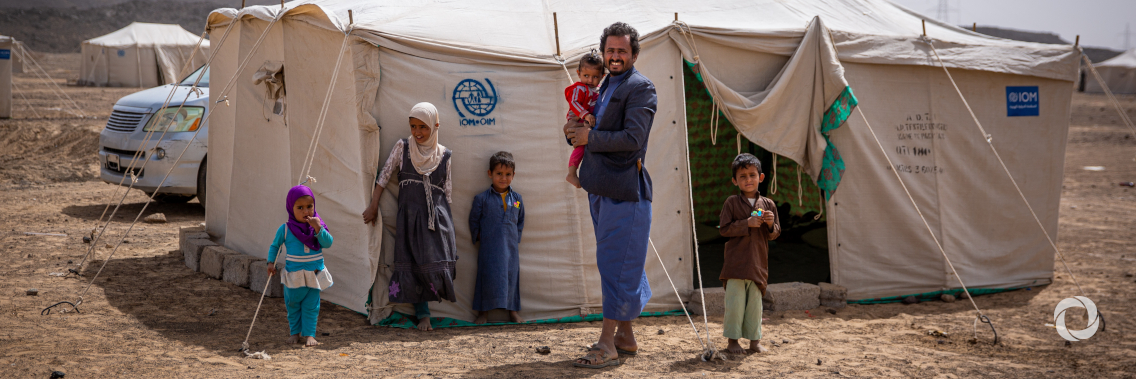
The outbreak as well as massive funding shortages pose major challenges for the humanitarian community working to assist internally displaced people living in overcrowded informal sites with little access to essential services.
The official number of COVID-19 cases in Yemen remains low. However, given limited testing capacity and concerns among the local population about seeking treatment, the humanitarian community is working under the assumption that the actual numbers are much higher.
Reports of increasing illness and death from communities across the country are confirming this assumption. Displaced people have now begun to list the outbreak as the reason for their displacement.
Due to access constraints, IOM DTM currently only collects data on displacement in part of the country— districts in 12 governorates out of 22. Therefore, the number of displacements in 2020 is likely to be much higher than what has been recorded.
The water and sanitation situation in many of the displacement sites in Yemen is extremely worrying, and displaced Yemenis are finding it difficult to access health care. This is particularly the case in Marib where the majority of people have been displaced to this year—more than 66,000 people.
Due to the sheer number of displaced people sheltering in and around Marib city, informal displacement sites are overcrowded and lack access to essential services.
Across Yemen, restrictions on entry to displacement sites due to infection prevention and control measures for both humanitarians and displaced residents themselves are hampering IOM’s response. Limited access to medical facilities and employment opportunities are key concerns for displaced communities.
In addition to collecting information on the movement and needs of internally displaced people in Yemen, IOM provides them with humanitarian assistance and protection. The Organization ensures that displaced communities across Yemen have access to health care, clean water, safe sanitation, shelter materials, and household items. In 2019, IOM reached over five million people, a vast majority of whom were displaced.
Original source: IOM
Published on 21 July 2020