
Add us as your preferred source on Google to see more of our content in Search.
 Add to Preferred Sources
The COVID-19 pandemic is slowing essential health services and spurring an alarming rise in hunger and malnutrition levels around the world, particularly among the world’s most vulnerable communities. After decades of progress, child mortality rates could rise for the first time in 60 years as a result of secondary effects related to COVID-19.
“While it will take months for official data to be collected and released, the early indicators are quite clear,” says Hajir Maalim, Horn and East Africa Regional Director, Action Against Hunger. “Hundreds of millions of people are hungry. More children are growing seriously malnourished, but fear of COVID-19 keeps their parents from seeking treatment. We lack the resources to fight both hunger and the pandemic, yet donors are slashing aid budgets.”
With vaccinations down by as much as 20%, the World Health Organization (WHO) projects that child mortality could rise by 13% in Somalia alone.
The increase in child mortality would be a major setback for Somalia, which has made significant health gains in the last two decades. While more than 12% of children in Somalia still die before their fifth birthday, the child survival rate has improved since the year 2000, when child mortality exceeded 17%.
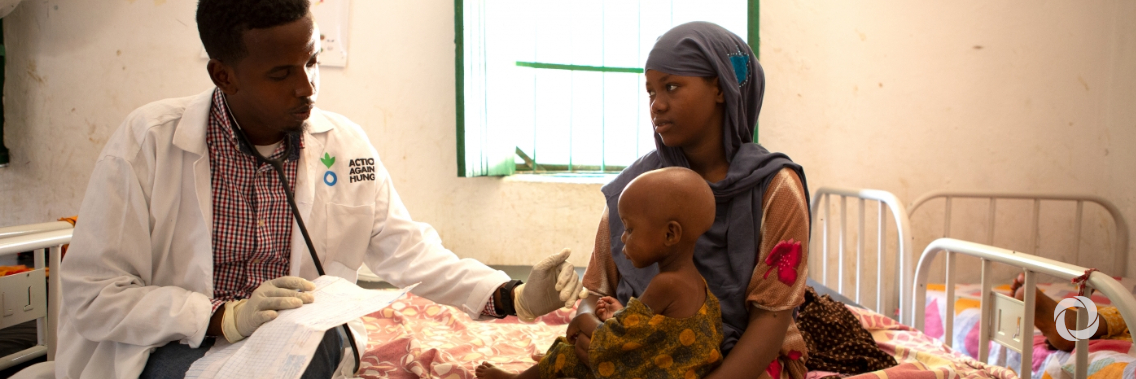
“Confirmed COVID-19 cases in Somalia are declining, but that doesn’t mean communities are immune from the pandemic’s devastating impacts,” says Ahmed Khalif, Country Director for Action Against Hunger in Somalia. “Fewer patients are coming to our health centers for outpatient services when their children first fall ill – they fear the virus. That means we’re seeing children with more severe and more complicated cases in our inpatient facilities because we could not catch or treat illnesses like malnutrition early.”
Action Against Hunger’s warning about child mortality in East Africa comes as the United Nations last week released the State of Food Security and Nutrition in the World Report, revealing that 2019 was the fourth consecutive year of rising hunger. Last year, hunger impacted one-quarter of the global population, leaving 144 million children stunted and 47 million acutely malnourished. The Food and Agriculture Organization (FAO) reports that as many as 132 million more people could be driven into hunger due to indirect consequences of COVID-19: loss of livelihoods, rising food costs, and restrictions in trade and movement.
“While hunger is linked to COVID-19, climate change, and conflict, hunger remains predictable and preventable. Prior to 2014, hunger levels were falling, and we can make progress again,” says Dr. Charles Owubah, CEO, Action Against Hunger. “We urge decision-makers and donors to act rapidly to make food systems more sustainable, resilient, and just. That must include funding that reflects the belief that every life is equally precious.”
Fragile parts of East Africa are dealing with COVID-19, as well as the lingering impact of years of drought, followed by flooding, unprecedented swarms of locusts, and, in some places, conflict. As food insecurity increases, so, too, will cases of life-threatening malnutrition. Currently, just one in four seriously malnourished children has access to care, making hunger a factor in nearly half the deaths of children younger than five.
Original source: Action Against Hunger
Published on 21 July 2020