
Add us as your preferred source on Google to see more of our content in Search.
 Add to Preferred Sources
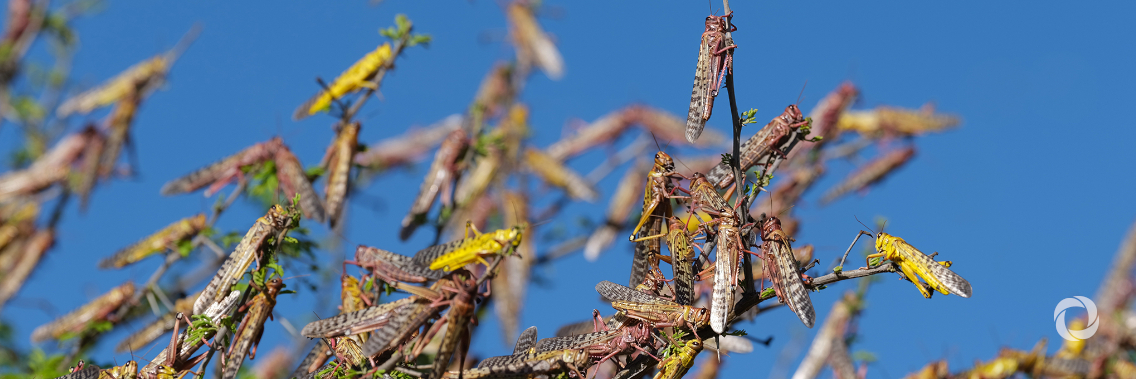
New UK-aid support will be used to tackle this year’s unprecedented locust outbreaks across Africa and Asia, where millions of insects are destroying thousands of hectares of crops.
With locust swarms growing 20 times larger since March 2020, International Development Secretary Anne-Marie Trevelyan announced £18 million of new UK aid in response to the crisis during a visit to British company Micron Group, on the Isle of Wight, which supplies pesticide sprayers to locust-affected countries.
The impact of the upsurge of insects across Africa and Asia has been made worse by coronavirus, with vulnerable communities facing dwindling food supplies alongside the pandemic.
Funded by UK aid, locust-affected countries are using Micron Group’s pesticide sprayers across Africa and Asia. Swarms of millions of insects can cover areas up to 100 square miles or more and these sprayers are able to cover large areas with pesticide.
Of the new funding, £17 million will go to the United Nation’s Food and Agriculture Organization’s FAO’s emergency appeal to help to control the increase of locusts across East Africa, Yemen, and South West Asia, as well as reduce the risk of swarms spreading into the Sahel.
The UK will also provide up to £1 million to improve early warning and forecasting systems for desert locusts so that countries can prepare for their arrival. This support, in collaboration with the University of Cambridge and weather data from the UK Met Office, will help the FAO to target locust breeding sites and control outbreaks before they’re able to affect crucial crops and pastures.
The new funding follows £8 million provided by the UK earlier this year to the FAO appeal, supporting Kenya, Somalia, Ethiopia, Sudan, South Sudan, Eritrea, Djibouti, Tanzania and Pakistan to destroy these pests. A supercomputer funded by UK aid is also helping countries in East Africa to track the insects’ movements around the continent.
Original source: DFID
Published on 23 July 2020