
Add us as your preferred source on Google to see more of our content in Search.
 Add to Preferred Sources
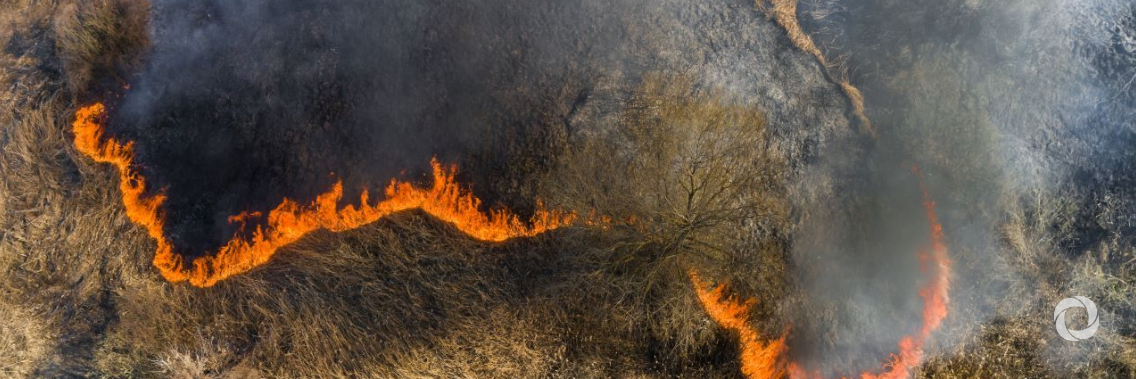
Exceptional and prolonged heat in Siberia has fuelled devastating Arctic fires. At the same time, rapidly decreasing sea ice coverage has been reported along the Russian Arctic coast.
Temperatures in Siberia have been more than 5°C above average from January to June and in June up to 10°C above average. A temperature of 38°C was recorded in the Russian town of Verkhoyansk on 20 June. Temperatures in parts of Siberia the week beginning 19 July again topped 30°C.
The prolonged heat is related to a vast blocking pressure system and a persistent northward swing of the jet stream, allowing warm air into the region.
Nevertheless, such extreme heat would have been almost impossible without the influence of human-caused climate change, according to a rapid attribution analysis by a team of leading climate scientists.
“The Arctic is heating more than twice as fast as the global average, impacting local populations and ecosystems and with global repercussions. “What happens in the Arctic does not stay in the Arctic. Because of teleconnections, the poles influence weather and climate conditions in lower latitudes where hundreds of millions of people live,” said WMO Secretary-General Petteri Taalas.
The Russian Federal Service for Hydrometeorological and Environmental Monitoring (Roshydromet) said that according to satellite monitoring), there were 188 points of probable fire on 22 July on the territory of Siberia.
The fires have been particularly intense in Russia’s Sakha Republic and Chukotka Autonomous Okrug in the far northeast of Siberia, both of which have been experiencing much warmer-than-usual conditions over the past months. Russian authorities have also declared that there is an extreme fire hazard throughout the Khanty-Mansiysk Autonomous Okrug – Yugra which is in western Siberia.
Wildfire smoke consists of a wide range of pollutants including carbon monoxide, nitrogen oxides, volatile organic compounds, and solid aerosol particles. Arctic wildfires emitted the equivalent of 56 megatonnes of carbon dioxide in June compared to 53 megatonnes in June 2019. Carbon monoxide levels over the northeast of Siberia were anomalously high over the region of the fires.
The Siberian heat wave this past spring have accelerated the ice retreat along the Arctic Russian coast, in particular since late June, leading to very low sea ice extent in the Laptev and Barents Seas, according to the available operational products of the U.S. National Snow and Ice Data Center and the US National Ice Centre (NIC). The Northern Sea route appears to be nearly open.
By contrast, the other areas of the Arctic seas appear to be near the 1981 to 2010 average for this time of year. Such contrasts serve as prominent examples of the larger variations that occur for sea ice extent on the regional scale, in comparison to the Arctic Ocean as a whole, according to NSIDC/NIC products.
The melting of ice and thawing of permafrost – thus potentially releasing the greenhouse gas methane – is having a major impact on infrastructure and ecosystems throughout the region.
Original source: WMO
Published on 24 July 2020