
Add us as your preferred source on Google to see more of our content in Search.
 Add to Preferred Sources
The number of cases of COVID-19-infected persons is also rapidly increasing in Iraq. The peak of the disease is expected in autumn. At least four new hospitals are to be built in the country’s largest cities by then. KfW is financing the construction on behalf of the German government with an initial amount of EUR 15 million.
At the end of April lockdown and corona restrictions were lifted in Iraq. Since then the number of cases has risen sharply. A peak in infections is expected in autumn, which will overburden the infrastructure of the health care facilities. By then, almost 50,000 beds in hospitals, including 12,000 intensive care beds, will be needed for the treatment of COVID-19 patients alone. In Iraq, however, there are only just under 50,000 hospital beds at all, including about 700 intensive care beds.
To support the Iraqi health system KfW is financing the construction of at least four hospitals on behalf of the German Federal Ministry for Economic Cooperation and Development (BMZ) with an initial EUR 15 million. It is being examined whether further hospitals can be financed in a further phase.
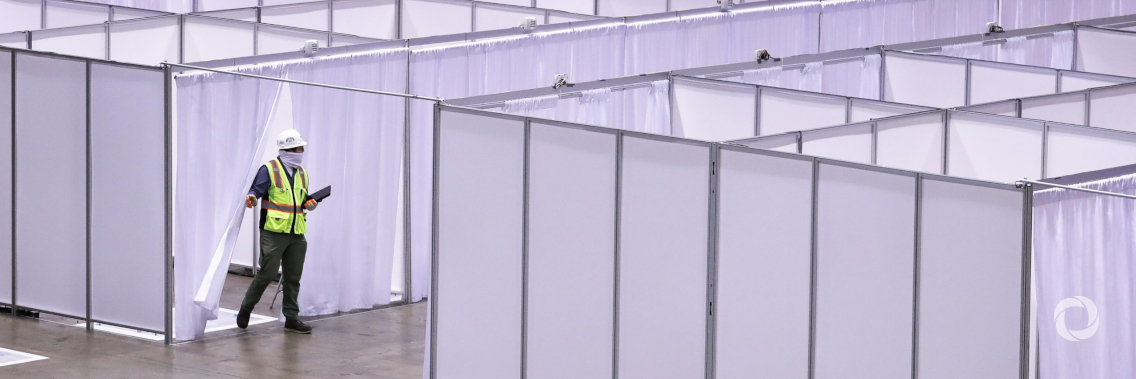
A simulation of the course of infection according to a WHO model showed that the conurbations will suffer the highest case numbers. Therefore, four hospitals are planned in the major cities of Baghdad, Basra, Niniveh and Süleymaniye. They will initially be built as temporary hospitals in modular prefabricated construction, but in the long term, they can serve as regular hospitals. Each hospital will have 100 beds, including 40 intensive care beds. In the short term, more than 7,000 patients will benefit directly. But the separate treatment of COVID-19 patients in separate facilities is beneficial for all patients in the country, because otherwise isolation could not be guaranteed.
Original source: KfW
Published on 27 July 2020