
Add us as your preferred source on Google to see more of our content in Search.
 Add to Preferred Sources
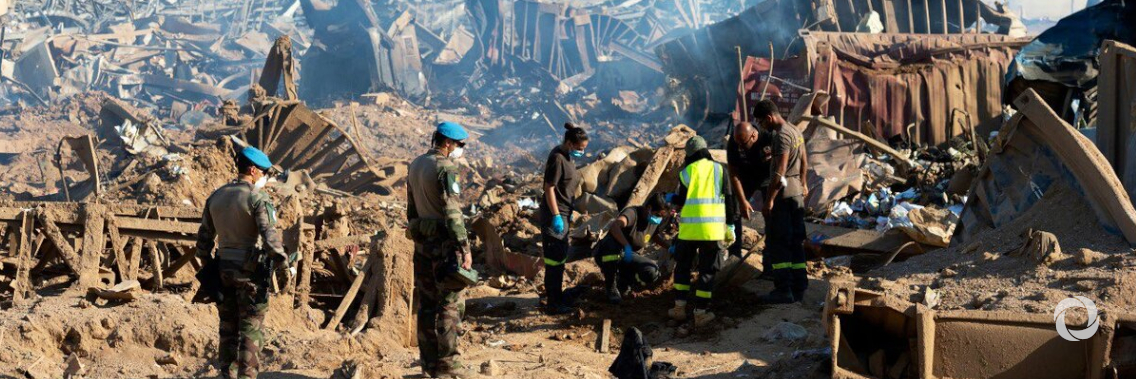
The response to the explosion in Beirut requires global support in order to “surmount the devastating impact” of the crisis facing the Lebanese people, the UN Deputy Special Coordinator for the country said.
Reiterating the Secretary-General’s commitment to assist Lebanon, Resident Coordinator Najat Rochdi, who also coordinates the UN humanitarian effort in the country, has released $9 million from the Lebanese Humanitarian Fund to help meet immediate needs.
“With the emergence of new challenges due to the latest devastating event, UN in Lebanon and partners are mobilized to provide immediate humanitarian assistance to the Lebanese people in support of the government’s response to this tragedy”, she said.
UN emergency relief chief Mark Lowcock will also release additional funding from the Organization’s Central Emergency Response Fund (CERF) to address immediate needs and help strengthen the capacity of existing hospitals.
This will include expanding and establishing additional Intensive Care Units (ICUs) where needed and provide trauma kits, ventilators, medical supplies, and medicine.
According to the World Health Organization (WHO), the blast has rendered three hospitals inoperable. At the same time, two other facilities sustained substantial damage, and the equivalent of 500 hospital beds have been lost.
UN Deputy Spokesperson Farhan Haq told journalists that in coordination with the Lebanese Ministry of Health, further assessments are underway to “identify available capacity, material needs and operational gaps in the health sector”.
As health organizations start to procure medical equipment and supplies, WHO is helping to cover 1,000 trauma and 1,000 surgical interventions for people suffering from burns and wounds caused by glass and other debris from the blast.
Meanwhile, according to the Office for the Coordination of Humanitarian Affairs (OCHA), medical facilities in Beirut remain inundated with trauma and burn victims, with many providing treatment on sidewalks and in carparks.
And many intensive care units were already near capacity with COVID-19 patients, and the nation’s outbreak worsens.
OCHA is deploying surge teams to assist with the emergency response, including experts from the UN Disaster Assessment and Coordination (UNDAC) team, and International Search and Rescue Advisory Group.
While Beirut International Airport remains open for passenger and cargo flights, the port of Beirut – where the explosion took place – is destroyed.
The port was the main lifeline of the country as both an economic hub and the main entry point for many essential medicines and supplies.
“With the Beirut Port inoperable, the UN and its partners are looking to adjust logistic networks to ensure sustained operations”, said Mr. Haq.
He flagged that humanitarian materials would likely be redirected through the Tripoli Port while flagging that because it has a lower capacity than the Beirut Port some supply chains may be adversely affected.
Original source: UN News
Published on 6 August 2020