
Add us as your preferred source on Google to see more of our content in Search.
 Add to Preferred Sources
Global cooperation against COVID-19, the alarming rate of cyberattacks and Beirut explosions. Here is what you missed from last week’s headlines in the international development sector:
Global cooperation is our only choice against COVID-19, says WHO chief
With more than 18.5 million cases of COVID-19 reported worldwide as of August 6 and 700,000 deaths, the UN’s top health official again appealed to countries to unite in the fight against the disease
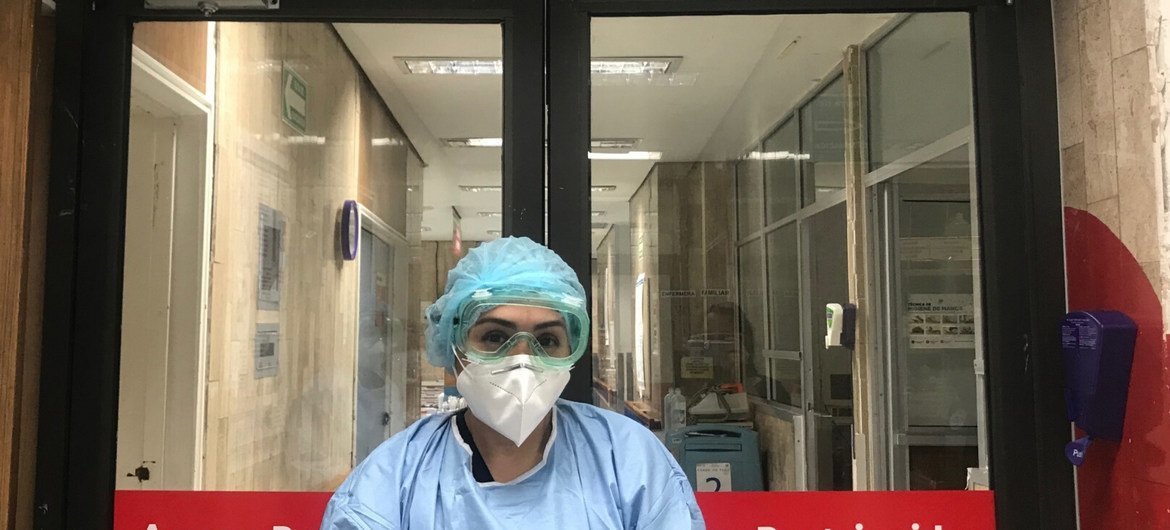
Tedros Adhanom Ghebreyesus, Director-General of the World Health Organization (WHO) was addressing the Aspen Security Forum, which brings together top-level present and former government officials from the United States.
The Americas remain the current epicentre of the COVID-19 pandemic.
“For all our differences, we are one human race sharing the same planet and our security is interdependent – no country will be safe until we’re all safe. I urge all leaders to choose the path of cooperation and act now to end this pandemic! It’s not just the smart choice, it’s the right choice and it’s the only choice we have.” he told the virtual meeting.
“I urge all leaders to choose the path of cooperation and act now to end this pandemic! It’s not just the smart choice, it’s the right choice and it’s the only choice we have.”
INTERPOL report shows alarming rate of cyberattacks during COVID-19
An INTERPOL assessment of the impact of COVID-19 on cybercrime has shown a significant target shift from individuals and small businesses to major corporations, governments, and critical infrastructure.
With organizations and businesses rapidly deploying remote systems and networks to support staff working from home, criminals are also taking advantage of increased security vulnerabilities to steal data, generate profits, and cause disruption.
In one four-month period (January to April) some 907,000 spam messages, 737 incidents related to the malware and 48,000 malicious URLs – all related to COVID-19 – were detected by one of INTERPOL’s private sector partners.
80,000 children displaced due to Beirut explosions – UNICEF
Some 80,000 children have been displaced by the Beirut explosions, according to UNICEF estimates, with families affected in desperate need of support.
The explosions left 140 people dead, 5,000 injured and hundreds missing. UNICEF is concerned that many children have suffered trauma and remain in shock.
“Over the past 48 hours, UNICEF continued to coordinate closely with authorities and partners on the ground to respond to the urgent needs of families affected, focusing on health, water, and the wellbeing of children,” said Violet Speek-Warnery, UNICEF Deputy Representative in Lebanon.
The port of Beirut – where the explosion took place – is the main lifeline of the country. It is now totally destroyed.
Global sales of disposable face masks alone are set to skyrocket from an estimated $800 million in 2019 to $166 billion in 2020.
DevelopmentAid Editorials
Development Aid support for economies in PNG remains vital for sustainable economic growth
Development aid support for economies in the Pacific region continues to play a pivotal role in helping governments to meet critical challenges such as fiscal constraints and a shortage of forex. The Papua New Guinea economy is currently faced with economic chaos prominently characterized by hefty government borrowing and a cyclical lack of forex since 2014 despite government interventions in the markets through various means.
The impetus to redesign global supply chains
By causing disruptions never before experienced, the pandemic crisis has revealed the fragilities of global supply chains. Businesses and governments have found themselves facing the need to reset a complex ecosystem. Despite the needed liquidity injections governments and central banks have provided as an urgent response to acute needs, the optimal solution is a strategic approach in terms of building smarter supply chains and boosting economic recovery.
Girls in Nepal face multiple obstacles to attend school
Although Nepal’s constitution guarantees equal rights to education, stating that every child has the right to education and no child should be subject to marriage, nevertheless, girls face multiple obstacles to attend schools. As they reach higher grades, they are forced to drop out of school and subjected to marriage at an early age. This is mainly because the specific needs of girls are not considered within education systems and plans but also because parents are not alert to the need to educate their daughters while others cannot afford it. The Nepal Living Standards Survey (2011) revealed that Nepal has a literacy rate of 56.6% and there exists a vast difference between males and females with the male literacy rate stands at 71.6% while for females, it is 44.5%.
Here’s what else has happened
Oxfam: Oxfam is extremely concerned about the ability of communities in Beirut, and the rest of Lebanon, to recover from the latest crisis. Even before the blast, Lebanon was at breaking point, with people struggling to cope with multiple, complex crises of economic collapse and a global pandemic. The scale and magnitude of the disaster means hundreds of thousands of people now need immediate aid including food, shelter, water, fuel, protection, as well as support to rebuild their lives and livelihoods well into the future.
WHO: The South African COVID-19 response will soon be bolstered by a surge team of health experts from the World Health Organization (WHO).
ADB: The Asian Development Bank (ADB) has approved a $100 million loan to strengthen Uzbekistan’s resilience to public health emergencies, including the coronavirus disease (COVID-19) pandemic, by steadily improving testing, diagnosis, and the management of COVID-19 cases over the next two years.
USAID: The United Nations World Food Programme (WFP) welcomes a contribution of US$12 million from USAID’s Bureau for Humanitarian Assistance in support of our response to the COVID-19 pandemic in Afghanistan, where the public health emergency is compounded by increasing levels of food insecurity and where many communities’ livelihoods are being obliterated.
Reports
Latin America and the Caribbean’s foreign trade will fall by 23% in 2020 due to the pandemic’s effects
Latin America and the Caribbean’s foreign trade will experience a sharp drop of 23% in 2020 – exceeding the 21% decline recorded during the 2009 financial crisis – as a result of the economic effects arising from the coronavirus (COVID-19) pandemic, ECLAC indicated in a new report.
Read the report: The effects of the coronavirus disease (COVID-19) pandemic on international trade and logistics.
WTO report draws attention to the impact of COVID-19 trade disruptions on women
Women are likely to be harder hit than men by trade disruptions caused by the COVID-19 pandemic and the dangers are particularly acute in developing countries according to a new information note from the WTO Secretariat. The paper points to how governments’ policy responses could address the gender-specific effects of the crisis.
Read the information note: The Economic Impact of COVID-19 on Women in Vulnerable Sectors and Economies.
Events
Virtual | Access to Information in Time of Crisis – The UNESCO Information For All Programme Priorities and The COVID-19 Pandemic
? 26- 28 August 2020 ? 2:00 PM – 5:00 PM
Virtual conference
The conference will focus on the impact of proactive disclosure of information on health, education, and inclusive and gender-sensitive initiatives. The key modalities of the online conference is to promote priority areas in policy dialogues, and it is within IFAP’s mandate to influence policy by advocating the six priority areas of IFAP in light of Covid-19 and its implications across all sectors of society.
Course | Humanitarian Information Management, Communications and Media
JOIN COURSE
The Humanitarian Information Management, Communications & Media module is a stand-alone module linked to HOP Fundamentals, an open-access, self-paced catalogue of quality assured and interactive learning modules, curated by partner providers or created by Save the Children.
Fundamentals has three levels and is aimed at people beginning their career in the humanitarian sector or for those transitioning from the development sector. It is also aimed at individuals who have never received formal training on the essentials of humanitarian action, or for those wishing to ‘refresh’ their knowledge.
Virtual | 40th SADC Ordinary Summit of Heads of State and Government
? 10- 17 August 2020
Virtual
In view of the challenges posed by the COVID 19 Pandemic, the Summit and preceding meetings will be conducted virtually with a reduced agenda, focusing on the hand-over of the SADC Chairperson-ship, and critical Institutional matters. The Republic of Mozambique will host the virtual meetings as the Incoming Chair of the 16 Member regional economic bloc.