
Add us as your preferred source on Google to see more of our content in Search.
 Add to Preferred Sources
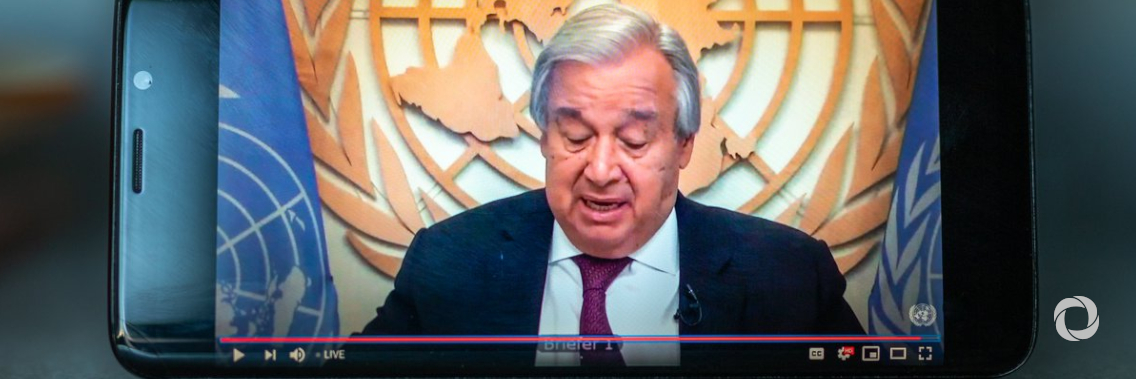
COVID-19 threatens not only hard-won development and peacebuilding gains but also “risks exacerbating conflicts or fomenting new ones”, the UN chief reminded the Security Council on the challenges to achieving sustainable peace, while pandemics ravage communities worldwide.
“The concept of sustaining peace is essentially about positive peace as opposed to simply ending wars. In other words, it is the idea that the international community accompanies a country well beyond the point of simply putting down guns, to the point where people feel protected and represented”, Secretary-General António Guterres told the meeting.
Against the backdrop of growing questions over the effectiveness of health systems and trust in institutions and governance across the globe, he said: “All of this means that our commitment to sustaining peace is more urgent than ever”.
The UN chief maintained that coherent, conflict-sensitive approaches to health and humanitarian crises will help deliver sustainable peace. However, he highlighted three challenges, beginning with the erosion of public trust, which Mr. Guterres said can lead to widespread disillusionment in authority at all levels.
Secondly, he raised concern over a destabilized global economic order, which, fueled by the unprecedented global economic crisis, adds to heightened socio-economic vulnerabilities.
He thirdly highlighted the weakening of the social fabric.
“We have seen many peaceful protests, and in a number of countries, COVID-19 has been an excuse for harsh crackdowns and a spike in state repression”, flagged Mr. Guterres, also noting that “at least 23 countries have postponed national elections or referenda, and almost twice as many have postponed subnational votes”.
However, the pandemic has also created opportunities for peace, including the UN chief’s global ceasefire appeal earlier in the year.
And Security Council resolution 2532, which demanded a general and immediate cessation of hostilities in all situations, “is a step in the right direction”, Mr. Guterres said.
The Secretary-General spelled out that pandemic responses must be conflict-sensitive, “starting with a multidimensional analysis on how the pandemic affects underlying risks that drive conflict”.
He underscored that inclusion is “critical” in humanitarian and development responses, especially with communities and marginalized groups, to “help rebuild trust and enhance social cohesion”.
Moreover, sustaining peace requires an integrated and coherent approach across humanitarian, development, and peace actors, according to the UN chief.
“The Council’s ongoing collaboration with the Peacebuilding Commission is critical” to help improve collective response. The UN chief also maintained the need for flexible and tailored approaches to peacebuilding in the context of the pandemic.
Original source: UN News
Published on 12 August 2020